Friendship Founder Runa Khan announces Her Organisation’s latest achievements and speaks at several meetups at the citywide event
By Friendship News Desk,
2 July, 2026
The eighth edition of the London Climate Action Week (LCAW) began on 20 June and ended on 28 June, featuring a series of high-profile events throughout the city. Over 1,300 events were hosted to share ideas and build partnerships towards climate action. The Mayor of London, Sadiq Khan, welcomed more than 100,000 climate advocates, experts, policymakers, COP presidencies, philanthropists, and activists from all over the world to the event this year. Friendship founder Runa Khan, along with representatives of Friendship Bangladesh and Friendship Luxembourg, attended several sessions throughout LCAW.
The Earthshot Prize Impact Assembly
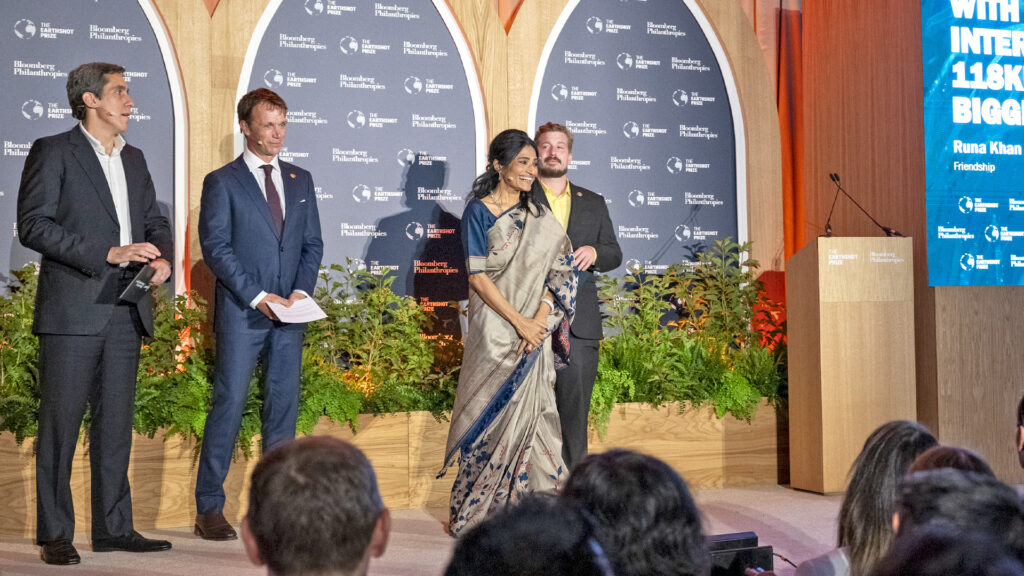
Runa Khan attended the Impact Assembly, The Earthshot Prize’s flagship event at LCAW, co-hosted with Bloomberg Philanthropies. She announced a five-year flagship climate adaptation initiative with Conservation International in the Sundarbans, with USD 10 million in support from the Global Environment Facility’s LDC Fund.
The event was co-hosted by Francine Lacqua, anchor and editor-at-large at Bloomberg TV and Robert Irwin, The Earthshot Prize Ambassador. After their opening remarks, HRH Prince William, founder and president of The Earthshot Prize, spoke at the event. “We now have proof. Solutions are working. Capital is moving. Policy is shifting. Partnerships are forming,” he urged. He shared success stories of environmental organisations working around the world, and added how in Bangladesh, Friendship is restoring one of the largest mangrove communities in the world. “This is what proof looks like, when it repeats,” he shared.
From Survival to Resilience: Frontline Lessons from Bangladesh to Europe
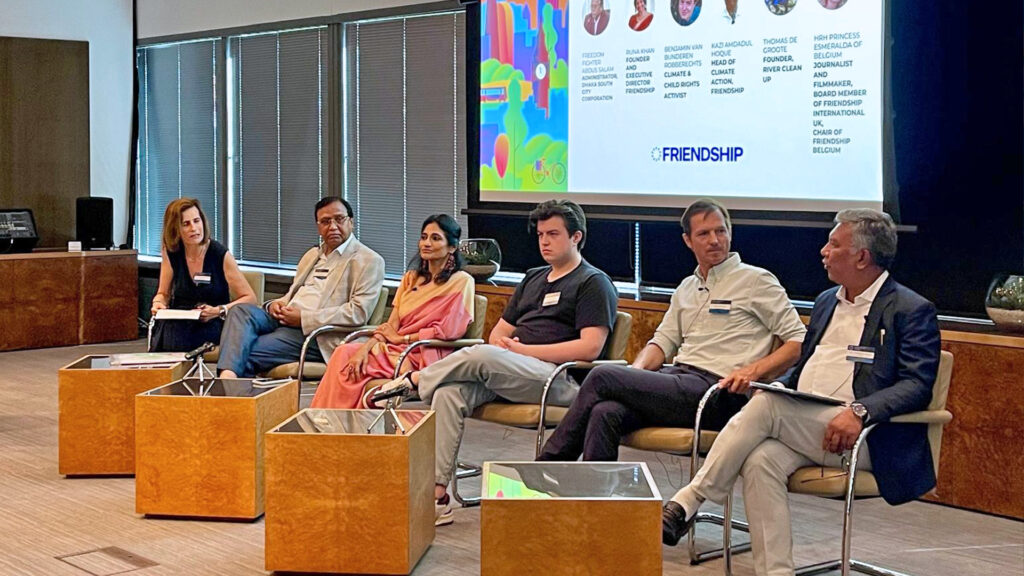
On 24 June, Friendship organised a cross-border panel discussion at LCAW on how knowledge from communities facing the most climate change issues can help expedite global climate action. This is especially relevant at a time when Europe is facing a heatwave crisis and climate issues like flash flooding. The session began with a preview of Water Between Us, a climate documentary co-produced by HRH Princess Esmeralda of Belgium and journalist Séverine Dieudonné.
When asked how Friendship is supporting climate-vulnerable communities and how it deploys a holistic approach to development, Runa replied that response cannot wait and cannot be isolated. Climate change is not a distant threat but a daily reality for vulnerable communities living in Bangladesh’s riverine chars and coastal regions. Locally led, needs-based solutions must fit the context of each climate-affected community. Climate impacts are not fragmented; therefore, integrated adaptation is imperative here.
Given that climate migrants are displaced repeatedly, the solutions must also move with them. Women are disproportionately affected, so their decision-making and leadership must be at the forefront of climate action. Friendship philosophy is to listen first. It is important to see communities not as victims, but rather as empowered agents of change. This is evident in Friendship’s integrated model, which involves two-thirds of Friendship’s more than 7,500 staff who come from the communities they serve. The community is not just the recipient. They are the delivery system.
Runa and Kazi Amdadul Hoque, Head of Climate Action at Friendship, offered practical examples from Friendship’s 24 years of experience, from the first floating hospital to the award-winning mangrove plantation. They credited The Earthshot Prize for bringing field-level solutions to global visibility and supporting initiatives that can be replicated across climate-vulnerable Commonwealth countries and beyond. They also urged that integrated models should not be adopted blindly, but rather they must fit into their local realities and contexts. The goal is not to scale Friendship as an organisation. The goal is to scale a way of working: locally led, needs-based, integrated and rooted in dignity and hope.
The Global South is Not Waiting: Climate Solutions from the Frontlines
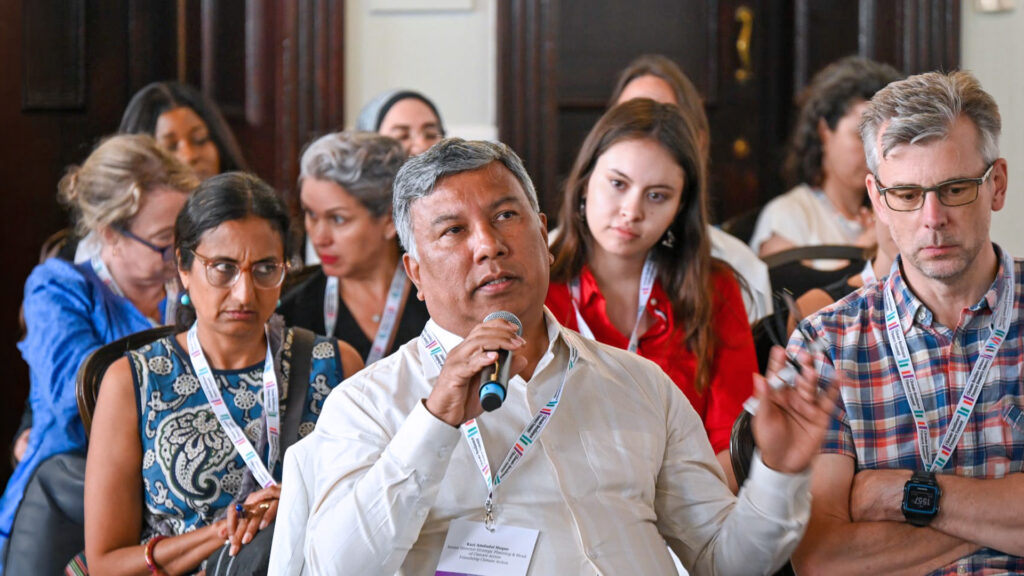
On 23 June, Runa was invited as a speaker in another LCAW session convened by Goonj as part of the India Impact House at the London School of Economics. The session explored community-led solutions shaped by frugal innovation, indigenous knowledge, collective action, and understanding of local realities. The discussion also focused on what it takes to shift capital, build trust and partnerships, and take decision-making closer to the frontline communities.
When asked about how to navigate through climate priorities during political turmoil, Khan again emphasised urgency, sharing that rivers and cyclones don’t wait for elections. Climate action must be a national and human responsibility; that goes beyond party, comfort, or power. A woman drinking saline water, a farmer losing land, or a girl at risk of child marriage cannot wait for political clarity. They need action today, not future promises. Politics can churn, but communities remain.
Therefore, a climate-resilient system and infrastructure will not be affected by politics. It will remain deeply rooted in community ownership, local skills, and values. Community disaster committees, early warning, food banks, swimming, first aid, safe shelters, movable schools and mobile healthcare are the architecture of survival. Those who are disproportionately affected must step forward with leadership. Communities can teach us resilience, knowledge, and humility. People cope because they believe tomorrow can be rebuilt. Our responsibility is not to give pity, but to give them a platform. Dignity and hope are the pillars that allow people to restart.
Getting Ahead of the Curve: Direct Finance for Climate Resilience
On 25 June, Kazi also spoke in a session on anticipatory protection and pre-arranged climate finance organised by Comic Relief, with collaborators including the International Institute for Environment and Development (IIED), Centre for Disaster Protection, and Cash for Conservation Group.
A key question asked in this session was why people wait for disasters before releasing finance when they already know many of them are going to happen because of climate change. Kazi shared perspectives from Friendship, including Friendship’s current work with the Reversing the Flow (RtF) project supported by the Netherlands Enterprise Agency (RVO). He urged that by devolving finance to communities, local people get to decide what is needed most and implement solutions themselves. Seeing their progress, the local government is now matching more resources and partnering with communities further. A small amount of support before a flood may protect livelihoods, assets, and dignity, but that same support delivered later becomes emergency relief.
As climate shocks become more frequent and intense, it is important to shift from the perspective of relief to a perspective of resilience, from response to prevention, and from urgent finance to pre-arranged finance. Faster response will also not be adequate. It is our responsibility to try to ensure that communities face fewer disasters. Anticipatory warnings as well as anticipatory finance are key factors that will drive that change.