Friendship Luxembourg is celebrating its 20th anniversary. Its president, Marc Elvinger, looks back on the unique history of an NGO founded in Bangladesh, which has become a recognised player in humanitarian aid and climate adaptation. Behind the hospital ships, portable schools and mangrove projects, he champions Luxembourg’s role, which has not been to take the lead, but to enable a local organisation to retain control over its own development
(Note: This article was originally published in Paperjam on 1 July, 2026)
Written by Thierry Labro
1 July, 2027
Since 2006, Friendship Luxembourg has been supporting the programmes of Friendship in Bangladesh, an organisation founded five years earlier by Runa Khan. Twenty years after its creation, the Luxembourg branch claims to have played a decisive role in scaling up this unconventional NGO: an organisation from the Global South, rooted in local communities, but now capable of engaging with major international donors. According to Friendship Luxembourg, the Luxembourg network provides nearly 40% of the funding for the organisation’s long-term development projects in Bangladesh. In 2025, Friendship also won the Earthshot Prize in the ‘Fix Our Climate’ category, a global recognition of its climate adaptation model.
For readers who are new to Friendship Luxembourg, how would you describe this organisation?
Marc Elvinger: “Friendship is a rather unusual organisation within the field of international aid and cooperation. Firstly, because it is an NGO from the Global South, it was founded in Bangladesh by Runa Khan, a Bangladeshi woman who lives in Bangladesh, although she travels a great deal. Its main base remains Bangladesh.
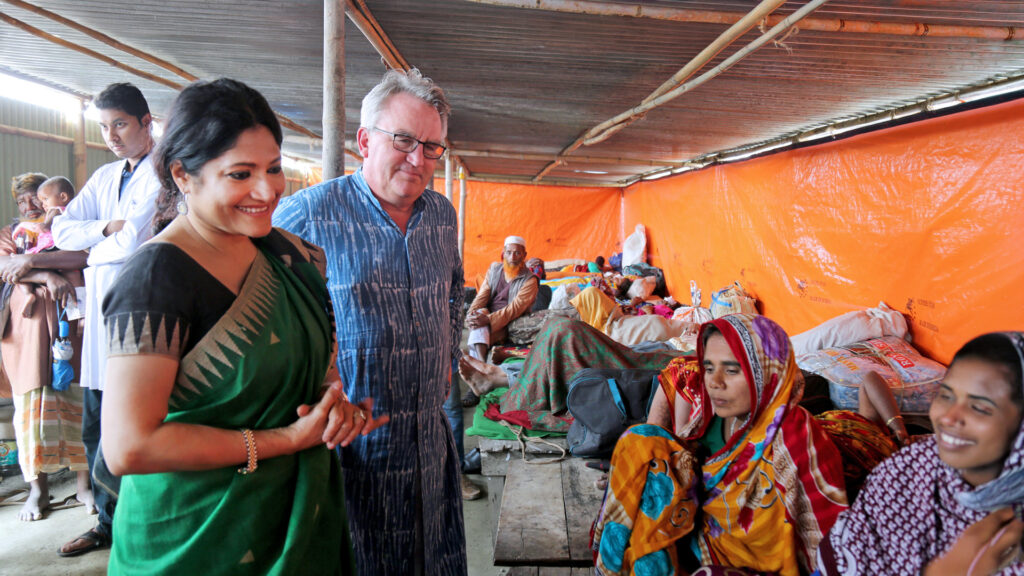
Runa did not come from the development sector. She is, in fact, an entrepreneur. She first set up a fashion house, then went on to launch other businesses. And it was whilst travelling in northern Bangladesh, on the Brahmaputra, that she discovered the communities living on the chars – those shifting river islands, which are in fact sandbars. These are some of the poorest communities in the country, very isolated and often deprived of access to healthcare, education or public services.
The initial project was very practical: to convert an old barge into a hospital ship to provide healthcare to these communities. Runa wasn’t necessarily aiming for much more than that. She wanted to do it effectively. Then things evolved, because simply providing healthcare in a region that lacks everything is not enough. There is also a lack of education, technical support for small-scale farmers, access to social services and access to justice.
Maria Teresa, the future Nobel Peace Prize laureate, and the arrival of Luxembourg
How does Luxembourg fit into this story?
“Runa realised very quickly that if she wanted to develop her programmes in line with the needs she identified locally, she could not rely entirely on large international NGOs. Otherwise, she would have had to do what others told her to do. That isn’t quite in keeping with her character. She therefore wanted to create her own support network, to build closer ties with donors and avoid long chains of intermediaries, which are often costly, slow and sometimes out of touch with local realities.
The connection with Luxembourg was established in 2004, during a visit by Grand Duchess Maria Teresa to Bangladesh, where she was due to meet Muhammad Yunus. It was there that Runa was encouraged to come to Luxembourg, as the country had a favourable cooperation scheme in place. Friendship Luxembourg was subsequently established in 2006.
What makes Friendship Luxembourg different from a traditional fundraising organisation?
“I think we’ve managed to build a real community of Friendship supporters in Luxembourg. Friendship is not a well-known brand in the same way as the Red Cross or other major organisations. But we have built up a loyal community around the organisation, comprising private donors, businesses, institutions and Luxembourg’s development cooperation sector.
Friendship Luxembourg’s role has never been to run things from here. That is fundamental. Our role is to provide support, in the belief that the local organisation is best placed to identify what needs to be done and to carry it out. That does not mean we have confined ourselves to providing funding. The mangrove programme, for example, was developed with significant impetus from Luxembourg and technical support from Patrick Losch. But the implementation and ownership remain local.
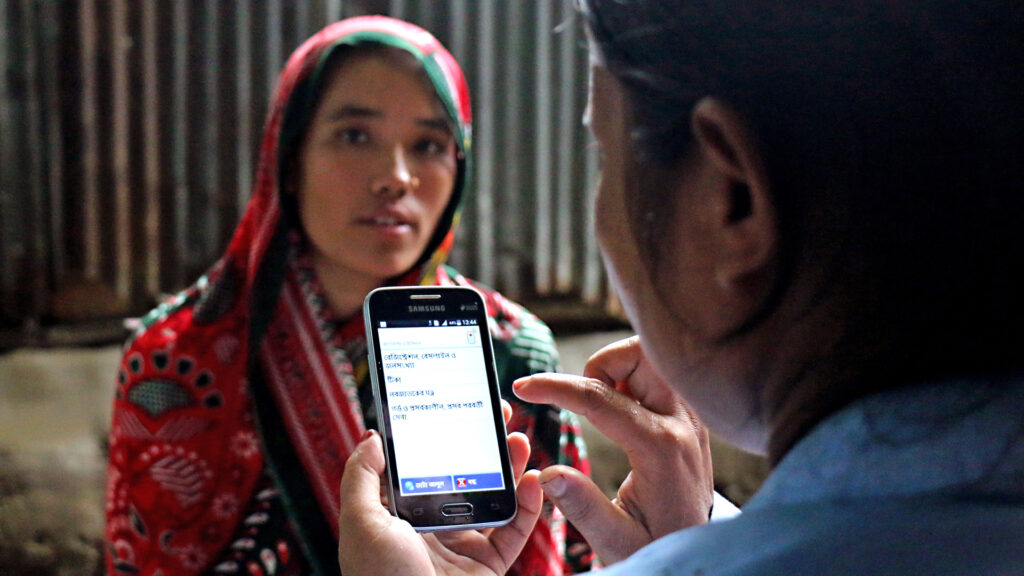
Friendship claims to serve 7.5 million beneficiaries a year. How do we decide what needs to be done?
“The driving force is need. But identifying those needs cannot be done from a distance. Friendship is deeply rooted in Bangladesh. The organisation now employs nearly 7,000 people in the country, and around two-thirds of them come from the local communities in which it operates.
Our teachers are not qualified teachers brought in from outside. They are people recruited from the local communities and trained by Friendship, because qualified teachers would not come to work in these regions. In the health sector, we have hundreds of locally recruited community health workers. We also have veterinary assistants and technicians capable of repairing and maintaining solar power systems.
That is what makes this model so effective: programmes develop organically, based on local needs and capabilities.
A multifaceted form of support with far-reaching consequences
Friendship was awarded the Earthshot Prize in 2025. Does this recognition change the way people perceive the organisation?
“Above all, it confirms something we were already experiencing on the ground: a very large part of what Friendship does falls under the heading of climate adaptation. It is not because the organisation decided one day to become a climate adaptation organisation. It is because the environment in which it operates dictates this reality.
When you have floating hospitals in a riverine region, portable schools that have to be moved due to erosion, agricultural programmes adapted to climate-related hazards, or mangroves planted to protect coastal villages from erosion and soil salinisation, you are at the heart of climate adaptation.
The mangrove programme is often viewed through the prism of carbon sequestration. This is true, and it can attract funding. However, on the ground, it is first and foremost a means of protecting land, dykes, villages and people’s health. In southern Bangladesh, soil and water salinisation has enormous consequences, including for women’s health.
What makes you most proud after 20 years?
“For me, it is the fact that Friendship Luxembourg and the Luxembourgish community surrounding Friendship have enabled a modest local organisation to grow into a local organisation that now serves millions of people, without losing touch with its local roots.
We have helped Friendship Bangladesh grow to a size and gain the credibility that now enable it to engage with major international organisations as an equal. That changes everything. The organisation is no longer merely an implementer for others. It can enter into genuine partnerships, with discussions on what needs to be done and how it should be done.
A budget and loyal donors
An NGO is often set up because the state fails to meet certain needs. Twenty years later, if the NGO has grown even larger, is this also a sign that those needs have not diminished?
“Yes, of course. We have to acknowledge that. Bangladesh remains a country where there is a great deal of poverty and the state lacks resources. It would be unfair to expect it to be able to sort everything out. But it must also be said that Friendship does not operate as a mini-state within the state. There are many areas of collaboration with the authorities, particularly at the local level. For the vaccination of children in mobile clinics, for example, the government provides the vaccines, whilst Friendship handles community mobilisation and logistics. In family planning, the government supplies the contraceptives, and Friendship organises their distribution. Our schools are authorised by the government and receive state-issued textbooks.
There are also more far-reaching collaborations. A programme funded by the Islamic Development Bank, focusing on hospital ships and a decentralised healthcare network, is based on a tripartite agreement between the Bank, Friendship and the Government of Bangladesh, with the aim that, after several years, the programme can be taken over by the central government.
Education is the state’s responsibility. But in the meantime, children are growing up. If we wait 15 years for the problem to be resolved, these children will have left school without an education. We cannot be content with a theoretical response when the reality is right there before us. It requires a combination of vision and pragmatism. I think this is a very strong characteristic of Runa Khan. We can, of course, hold philosophical views, but they are not always enough.
What is Friendship’s current budget in Bangladesh?
“The annual budget of the main organisation in Bangladesh is in the region of 20 million euros, or slightly more. Of this amount, around 7 million euros is allocated to programmes supporting Rohingya refugees in the camps, which are mainly funded by major international donors.
For what we call the ‘core programmes’, funding comes from a variety of sources. Luxembourg currently contributes around 6 million euros a year, comprising a mix of private and public funds. In particular, we have a framework agreement with the Luxembourg government, under which we are required to contribute 20 per cent of the funds in order to secure the remaining 80%. We also receive funding from the Ministry of the Environment for mangrove reforestation programmes.
Has the Caritas scandal made it more difficult to collect donations in Luxembourg?
“I don’t think our community has been unsettled by the Caritas affair. We haven’t seen any decline in donations. The Friendship community is loyal and strong.
My greatest fear lies elsewhere: in the current climate, people have plenty of other things on their minds. There is a clash of priorities, but also a general sense of insecurity. That could be a factor. At the same time, heatwaves and climate change may be making it clearer that climate adaptation is not an abstract issue.
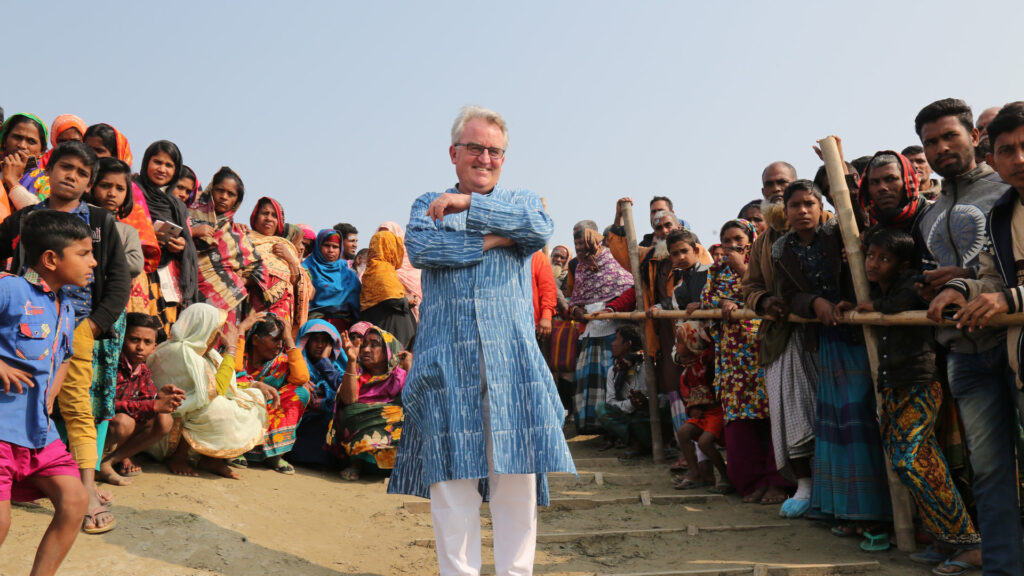
What evidence of climate change can we see on the ground?
“I’m not speaking here as a scientist, but what we’re seeing is greater unpredictability. Floods are more erratic, and sometimes more frequent. Tropical storms are also on the increase in the south. Friends from Bangladesh also tell me that the country traditionally had six seasons. Today, they feel as though they have lost three of them. That speaks volumes about a profound change, experienced over the long term.
You are also working on the concept of systemic impact. Why is this term important?
“Because an intervention does not merely produce measurable outcomes. We can measure the number of patients treated, pupils enrolled in school, hectares of mangroves planted, and income generated. This is essential. But some crucial outcomes cannot be measured in this way.
A cataract operation carried out on a hospital ship enables a person to regain their sight. The direct economic impact can be measured: a return to work, and a reduction in certain forms of dependency. But there is also something else: restored dignity, the trust built with the organisation, and changing relationships within the family and the community. This trust can then help ensure that other programmes – whether educational, agricultural or environmental – are more readily accepted.
Systemic impact is this: it is what brings about lasting change in relationships, behaviours, capacity for action, norms and trust within a community. Direct impact can be measured. Systemic impact is documented.
Could Friendship roll out its model to other countries?
“That’s an important question. Friendship has never considered operating elsewhere. It would be almost paradoxical, because the organisation’s strength lies precisely in its roots in the local community. It would be presumptuous – and probably misguided – to try to do the same thing elsewhere.
On the other hand, Friendship has gained experience – particularly in the area of soft skills – that may be useful to others. How to identify needs, respect the dignity of communities, build trust, work with local authorities, and avoid imposing solutions from outside: all of this can be shared.
That is why we are considering setting up a Friendship Academy, which would enable us to document and pass on these practices. Not to create yet another training centre, but to share experience, methods and a way of working.
Does the question of continuity also arise for Friendship, which is so closely associated with Runa Khan?
“Yes, of course. Friendship has appointed a CEO for Bangladesh, who is due to take up her post in September. This is an important step in ensuring the organisation’s continuity.
And the same question arises in Luxembourg too. After 20 years, as the organisation’s scope and needs have grown, and now that I myself have turned 66, we are seeking to put in place a management team that will ensure continuity. This involves strengthening the existing professional team and taking on certain tasks that were previously handled directly by members of the board of directors, in particular by the chair. This is only natural. An organisation that has grown must also adapt its governance.”
Note: This article was originally published in The Paperjam magazine on 1 July, 2026.