Finding hope and a place in society despite extraneous circumstances and physical disability
By Iffat Ara Sharmeen,
25 June, 2026
A Lifelong Struggle with Identity
Growing up in the remote, shapeshifting, climate-impacted char islands in northern Bangladesh means living in a rapidly changing environment with the looming shadow of uncertainty in the background. Sabu Mia was born on one such island in 1980, Char Koraiborishal in Chilmari, Kurigram.
Back then, healthcare in the region was unheard of. So, when a three-year-old Sabu contracted typhoid, it was the start of a long and painful struggle. Poverty and lack of access to healthcare left his typhoid untreated. His normal childhood was upended when he lost his eyesight because of the lack of treatment. Sabu Mia gradually lost vision in both his eyes, which prevented him from continuing his education. Sabu Mia lost all hope of recovering his eyesight, but he remained hopeful for a better tomorrow.
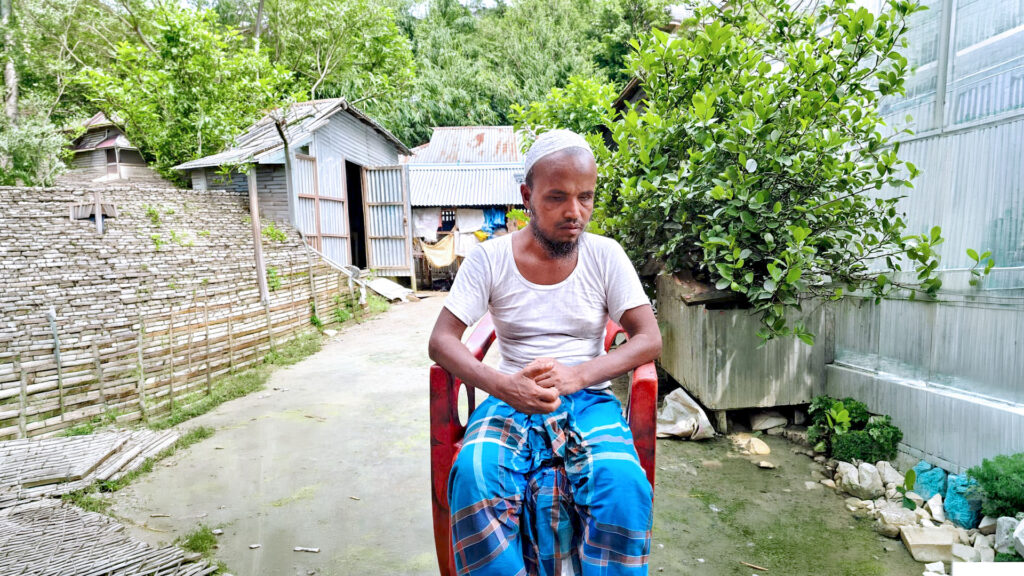
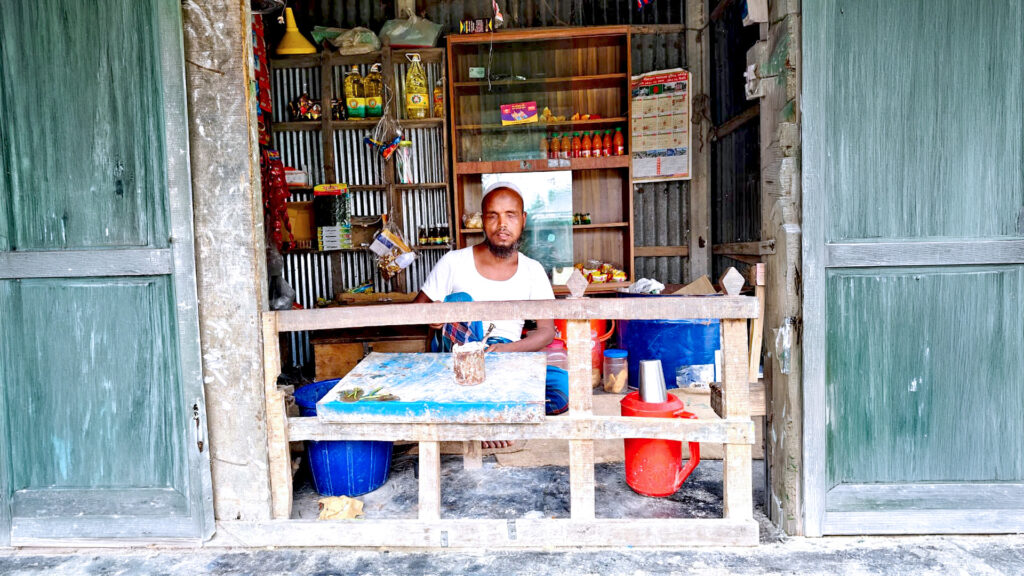
Sabu Mia slowly trained himself in other senses, such as hearing, touch, and memory, to conduct his daily life. He knew that he needed to earn an income to support his family and to strengthen his position in society. It was this willpower that pushed him to open a grocery store in 2002. Despite being bullied and insulted initially, his grocery store eventually found acceptance in the community. He got married and went on to have three children.
The Road to Dignity
Sabu Mia slowly carved his own place in society. Yet, financial problems did not leave him. He was the fourth child among the nine children of a poor farmer and a homemaker. His father struggled to make ends meet as a farmer and devout caretaker of the island’s Bisharpara mosque until his death in 2017. Sabu Mia empathised with his father’s strength from a very young age. So, when the community appointed him as the next caretaker of the mosque, stepping up to his father’s legacy was only natural.
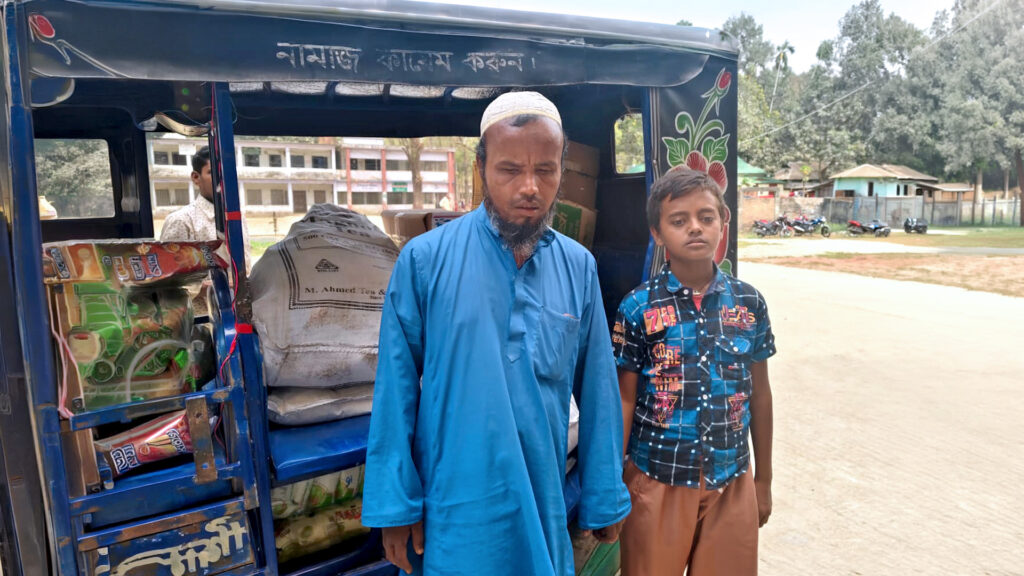
When the Friendship Disability Inclusive Development Programme (FDIDP) began operations on the island in December 2023, Sabu Mia did not hesitate to join the self-help group organised by the project. He learned more about his own visual impairment and other disabilities. Under the guidance of the project’s Community-Based Rehabilitation (CBR) worker, he regularly attended self-help group meetings. The meetings informed him of his rights as a person with disability and a citizen of the country, safeguarding policies, and helped him raise awareness on disabilities right from his grocery store.
Sabu Mia’s grocery store had its ups and downs, but when the FDIDP team noticed the financial issues, they approached the Upazila Social Service Officer (USSO) of Chilmari and advocated for assistance from the rehabilitation sector of the Department of Social Services. The USSO visited his residence and store and assessed his living and livelihood conditions. He recommended applying for a one-time cash grant under the Department’s rehabilitation and alternative employment program. He also praised Friendship as an agent of change for vulnerable community members like Sabu Mia.
Though Sabu Mia lost his eyesight in childhood, he never lost his vision. Now he is a key earning member of his family. He is proof that with appropriate support, persons with disabilities can contribute actively to society. Today, he is helping others see a future where disability is not a barrier, but simply one part of a life lived with dignity.