On a river island where the national electricity grid could never reach, the people found a way to harness the power of the sun and keep their community spirit alive
By Iffat Ara Sharmeen
22 July, 2026
For most of his life, Badshah’s evenings ended when the sun set. On Kabilpur Char, a shifting silt island in the Brahmaputra that appears and disappears with the river’s moods, dusk has always meant closing time for shops, for study, and for the small pleasures of gathering with neighbours. There was no electricity grid here, and none was ever likely to come to this geographically isolated island. The char was too remote, too impermanent, and too often underwater for power lines to survive the river’s temper.
Badshah runs a small tea stall in the char market, the kind of place that has always been more than a place to enjoy a cup of tea. It is where news travels, where arguments are settled, where the day is reviewed over a hot cup. It is where villagers come to unwind after a long day of work.
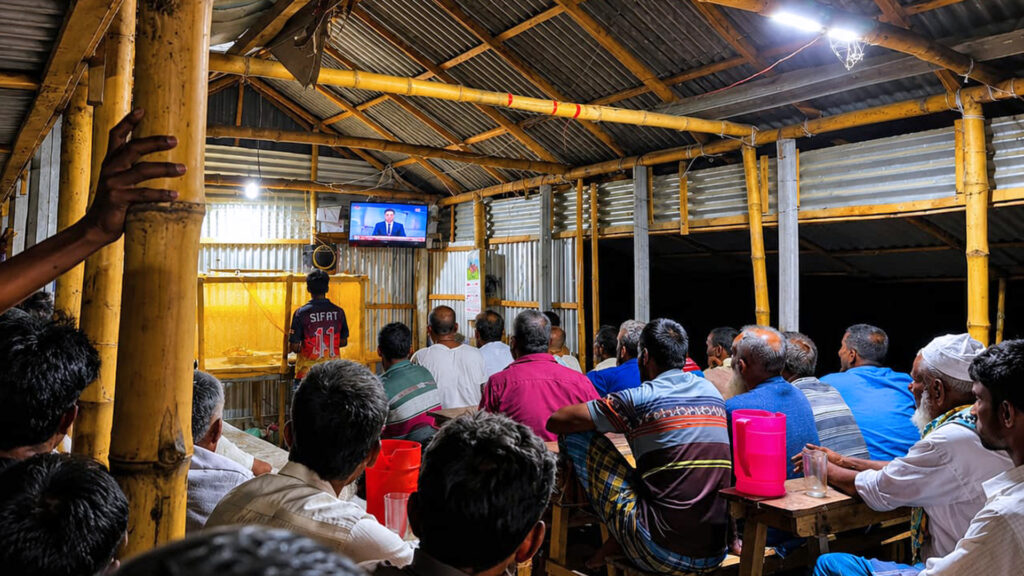
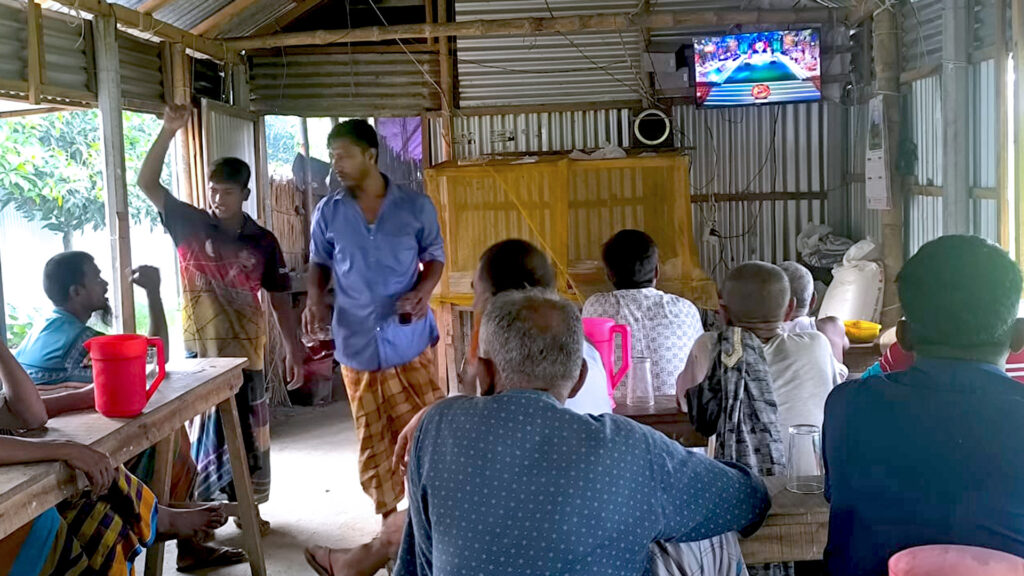
What changed everything for him was a single television, run entirely on solar power, installed under the Friendship-Summit Solar Village project. Ever since this solar microgrid went live, the lights have been staying on after sunset.
When the Sun Goes Down
Before obtaining an electricity connection and purchasing a television, Badsha Mia’s daily sales ranged between BDT 1,200 and BDT 1,500. Following these improvements, his business grew significantly, with daily sales increasing to approximately BDT 2,500 to BDT 3,000. He now earns an average daily profit of BDT 700 to BDT 800.
The increased income has enabled him to meet household expenses more comfortably, support his children’s education, and save for the future. He has also invested in livestock and currently owns two cows, which are cared for by his wife and contribute to the family’s financial security.
Badsha Mia has an elder daughter and a younger son. His daughter passed the Higher Secondary Certificate (HSC) examination in 2025 and was recently married. Despite her marriage, he remains committed to supporting her continued education. His seven-year-old son currently studies at a madrasa in Kabilpur.
Looking ahead, Badsha Mia and his wife aspire to purchase a piece of land and build a permanent asset for their family. They also hope to provide their son with quality education and support him in pursuing higher studies in Gaibandha town.
Overall, the family is optimistic about the future. Through hard work, careful financial management, and a strong commitment to education, they are steadily progressing toward greater economic stability, improved living conditions, and a brighter future for their children.
Nowadays, Badshah’s stall fills up after sunset. Whether it is sports, films, the evening news, or interesting events of the nation, the stall television has become a looking glass to the outside world for Kabilpur residents. People linger for longer. They order more tea. The vendors around him have noticed too: where one shop draws a crowd, the whole row benefits. A quiet corner of the market has become a bustling community space. There are now 25 solar-powered televisions running across the community.
Powering Livelihoods
Badshah’s tea stall is not the only one that found prosperity in the solar village. The Friendship-Summit Solar Village is a 62.2 kW microgrid, built with Summit Group as part of its CSR commitment, that began operations in December 2023. It now powers 160 households, 44 shops, two schools, two mosques, two irrigation pumps, three thresher machines, one crop dryer, and supports 60 farmers on the island. A total of 18 refrigerators are connected to the village microgrid.
What electricity means here is different from what it means elsewhere. It is a tailor trading his paddle-driven sewing machine for an electric one, working longer hours and earning more. It is a girl, once unable to open a book after dark, now an SSC graduate. It is the disappearance of a fire hazard from homes that once relied on kerosene lamps. The solar village became the grid the char needed for hope, dignity, and opportunity.
In June 2024, the project’s impact was recognised on an international stage, winning the Reuters’ Global Energy Transition Awards in the “Projects of Impact” category. For Badshah, though, it was just another day of enjoying tea and merrymaking.