As Bangladesh grapples with multiple climate impacts, riverbank erosion is happening more frequently than ever, often without warning, upending lives when they least expect it
By Iffat Ara Sharmeen
12 August, 2026
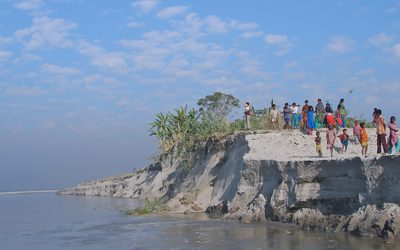
In Paschim Gabgachi Char of Fulchhari, Gaibandha, families watched as the Jamuna River suddenly began to weaken the riverbanks after heavy rainfall and strong currents. There was little time to think about what could be saved as the land began to collapse. Around 30 families were at immediate risk, with 18 houses by the riverbank directly threatened by erosion. These sudden instances of riverbank erosion have increased significantly over the years, leaving communities displaced and isolated from help. Yet, they did not despair.
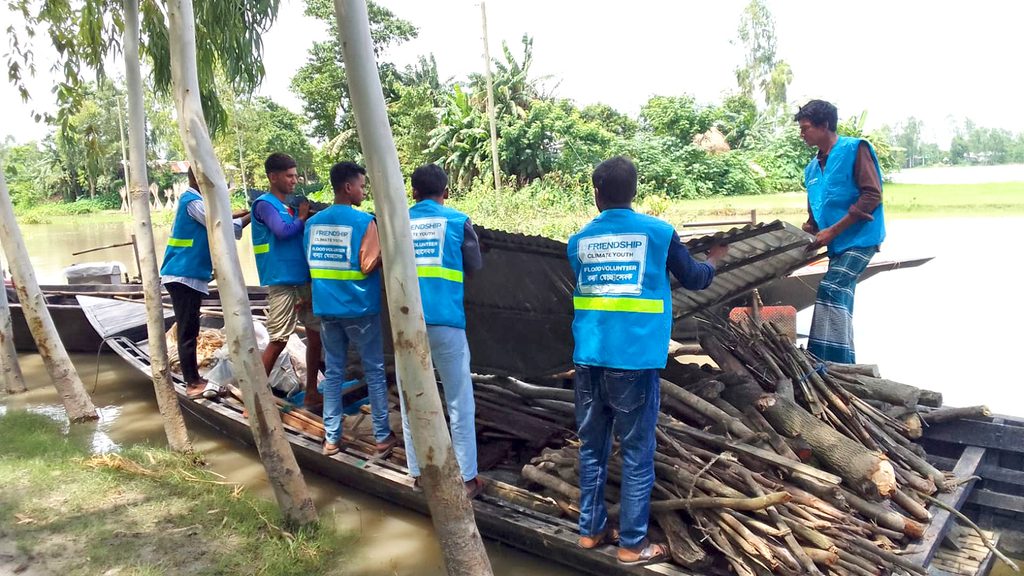
When the community alerted Friendship, ten Friendship Flood Volunteers joined the emergency response. They arranged boats so families could safely move away from the broken riverbank, helped them carry furniture, food, livestock, solar panels, tubewells, and other essential belongings to safer locations. Staff and volunteers worked closely to support affected families by distributing relief. Friendship also alerted the Upazila Nirbahi Officer (UNO) and the Union Parishad (UP) Chairman. Both visited the affected community and provided prompt assistance.
An All-Too-Familiar Scenario for Climate Vulnerable People
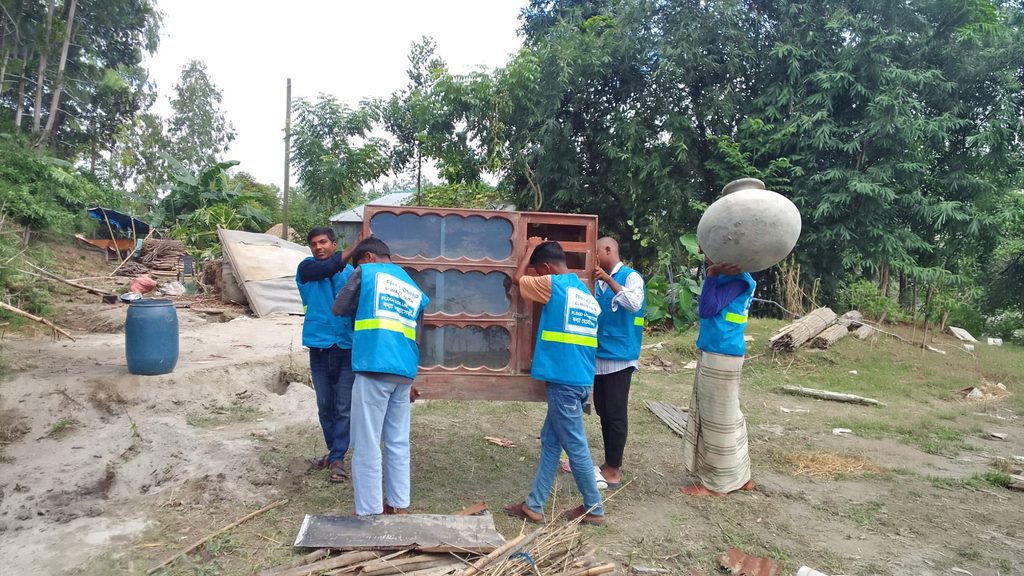
For communities living on Bangladesh’s char islands, riverbank erosion occurs year-round, but now river erosion is catching up with more families more frequently and more suddenly because of the impacts of climate change.
Riverbank erosion is one of the country’s most persistent forms of land degradation. Bangladesh’s National Plan for Disaster Management estimates that around 10,000 hectares of land are eroded by rivers each year, historically affecting about one million people annually. The plan identifies Gaibandha among the districts particularly exposed to erosion along the Jamuna.
The loss is not limited to land itself. When a river takes away a homestead or agricultural plot, it can also take away food, income, livestock, household assets, and years of accumulated savings. As a result, people struggle with nutrition, diseases, loss of livelihoods, drinking water, and money. Sudden bank collapses can leave households with only hours to move themselves and their possessions to safety. That is what made the response in Paschim Gabgachi Char so urgent.
Early and Immediate Action Saves Lives
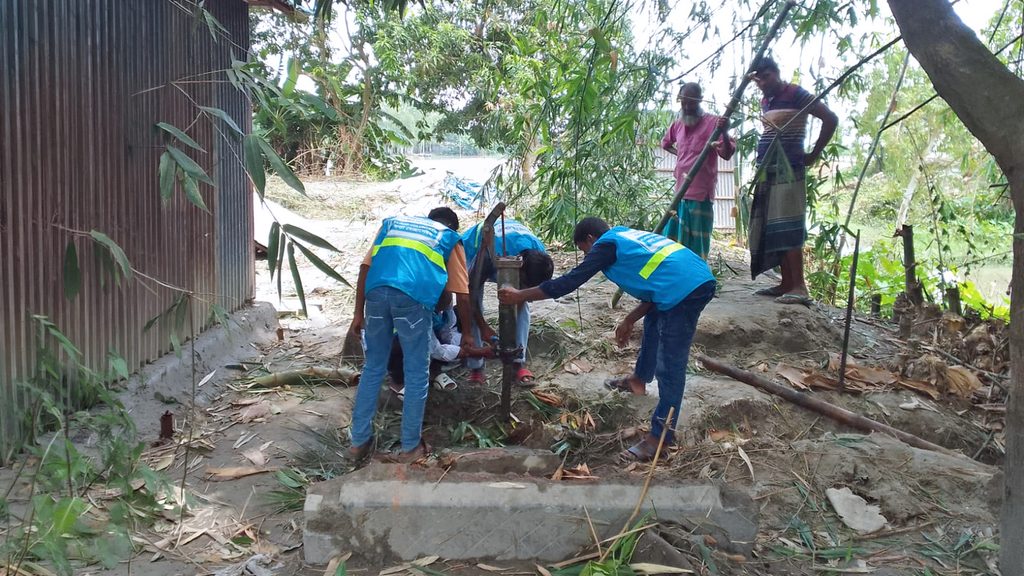
These may seem like small interventions, but even the smallest support at an early stage can prevent families from falling into ruin and help save lives. Saving a bed, a sack of food, a goat, or a solar panel can mean preserving the resources needed to begin again. Moving a household’s belongings before the river claims them can mean the difference between temporary displacement and a deeper crisis. Friendship volunteers are trained and chosen from within the community. They know the lay of the land, their own community’s priorities and needs, and can act accordingly and formulate quick strategies. This level of local resilience protects embankments and saves lives without waiting for external support.
Areas where the landscape can change overnight should have communities empowered with the knowledge, networks and support to respond to a crisis like this. Friendship built a strong network of flood volunteers in the northern region of Bangladesh, particularly Kurigram and Gaibandha. 4,810 young flood volunteers are engaged in this network. They are not only involved in early action during floods, but also contribute to community awareness, provide basic first aid when needed, disseminate early warning and safety messages, train other young people in their local communities, and inspire others to act.
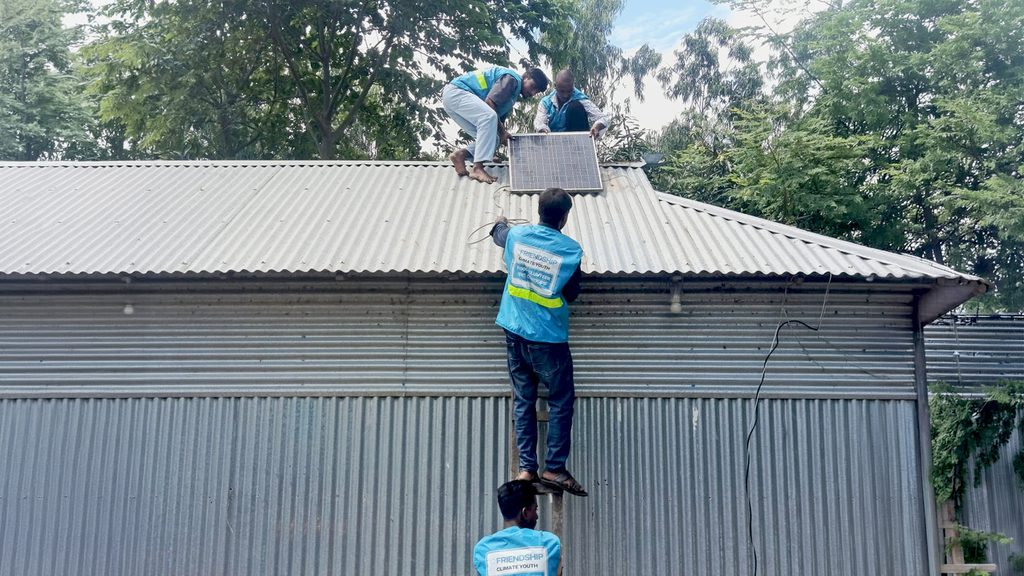
They play an important role in rescue and response during disasters and continue supporting communities in rebuilding and recovering after disasters. Their involvement demonstrates how youth-led volunteer networks can strengthen community resilience and help communities prepare for, respond to, and recover from disasters.