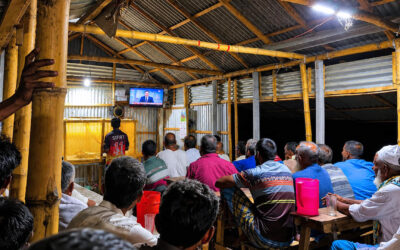
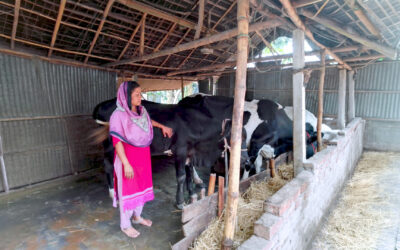
Perspectives from local char communities of Northern Bangladesh affected by flash floods and erosion.
By Eloise Dagneau
18 June, 2026
As we conducted two focus group discussions during my stint as a volunteer for Friendship’s Climate Action sector, I asked the residents of these remote, climate-affected chars why they stay, despite all the difficulties. They answered that they loved their land. It is where they are born, it is where they have a family and a community, and it is where they have access to land, which makes them prosper. They want to stay as long as possible.
That, of course, raises the question – how long can that be, and what are the costs of staying?
I thought char dwellers were like nomads—changing chars as they disappear and reappear. But the story is more complex and dangerous. These people are not nomads. This is, in fact, climate migration.
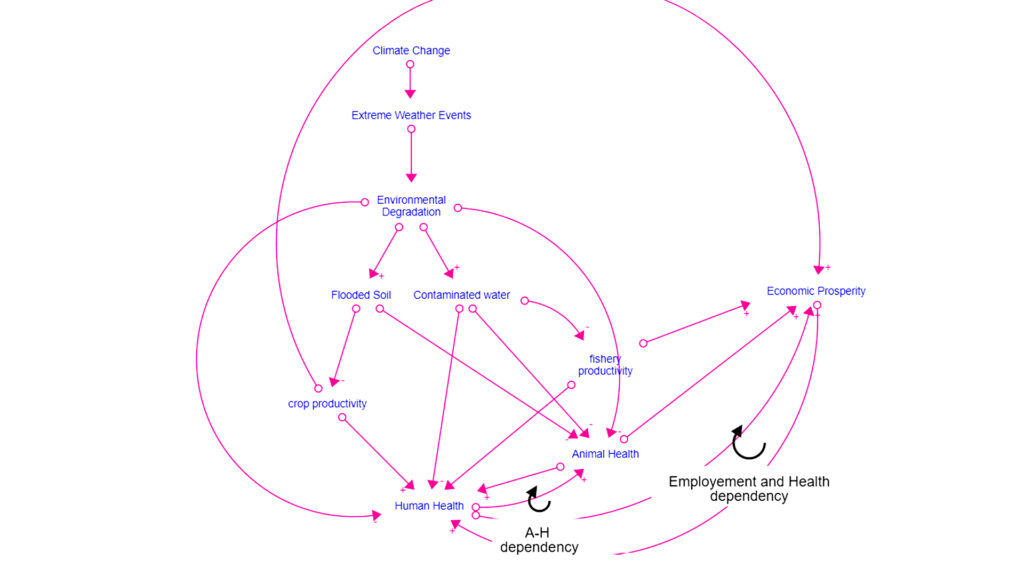
Humans depend on the land and water for cultivation and fisheries, respectively, which they sell in the market as a livelihood. Animals also benefit from this, as they are provided with food, water, and shelter like humans (Rahman & Dagneau, 2026). They give back to the land by grazing and providing natural fertiliser (such as cow dung). Humans, in turn, depend on animals for income generation, so animals are taken care of, completing the circle. However, it is still more complex, as people are integral to the farmland as well. These crop fields are cleaned, cultivated, and managed by humans, without whom the fertile land would remain barren.
However, the population of these isolated river islands are severely impacted by intense flash floods, frequent temperature extremes, and hailstorms. These events have been getting worse over the past 20 years. The environment is changing, and people can feel it.
Ever since Friendship’s presence in the area, many houses have been raised on plinths, a cluster village raised above flood levels that can accommodate 20-25 families and their livestock throughout the year, and 200-250 people along with their livestock and belongings during climate emergencies. Each of these plinths has a school, a tube-well for access to drinkable water, a freshwater pond, and animal shelters. Initiated by Friendship under the Community-Initiated Disaster Risk Reduction (CIDRR) programme, it highly improved the safety of these populations during the waiting period before and after a flood.
Although people wait safely on these plinths for the waters to subside, they remain in highly overcrowded conditions with limited access to food and fodder. Those who could not get to plinths have to rely on dry food for 15 days during small floods and up to 25 days during bigger floods. This drives up food insecurity and hygiene-related diseases. It requires cleaning the land, repairing tube-wells, repairing houses, and shelters, which further exacerbates the problem. Land erosion continues to creep in until the char is no longer a viable place to live.
People on these sedimentary islands can tell when the char is close to being uninhabitable. They stay until the very last moment, because migrating to another char implies starting over again. No one can really tell how long one of these chars will last. It depends on the exposure to erosion, on the initial size of the char, and other factors, but the residents stated that the average could be 8-10 years.
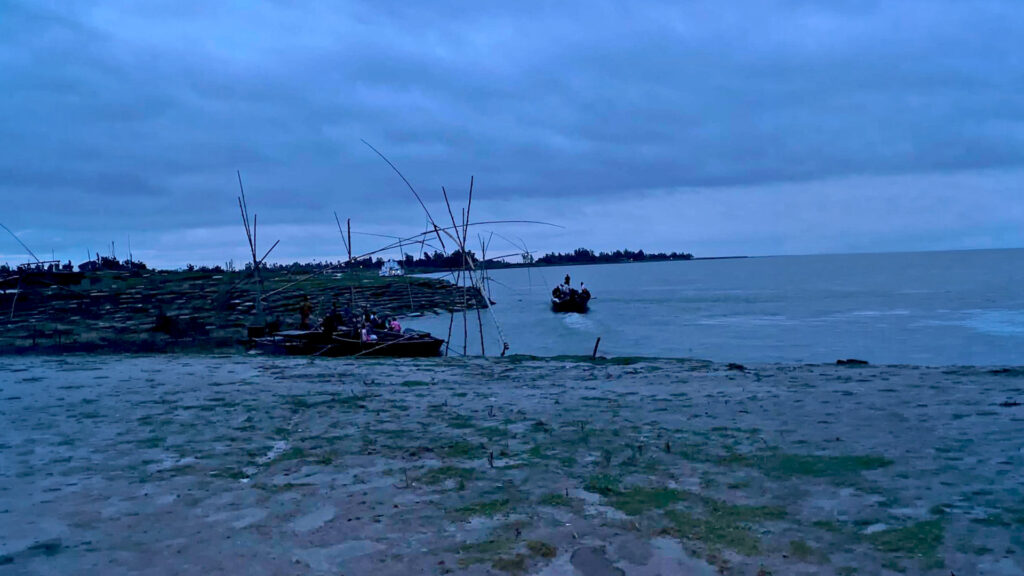
People hang on until the very last minute. Men go scouting for land. Other char dwellers accommodate those in need. Agreements are made, and new land is identified in advance in case of a need to relocate. However, moving is dangerous as there is very limited availability of boats, and the majority do not own any transportation. Fishing boats are too small to accommodate all their belongings and livestock. Animals may swim across, but 20-30% die trying. Children, ducks, and chickens may drown.
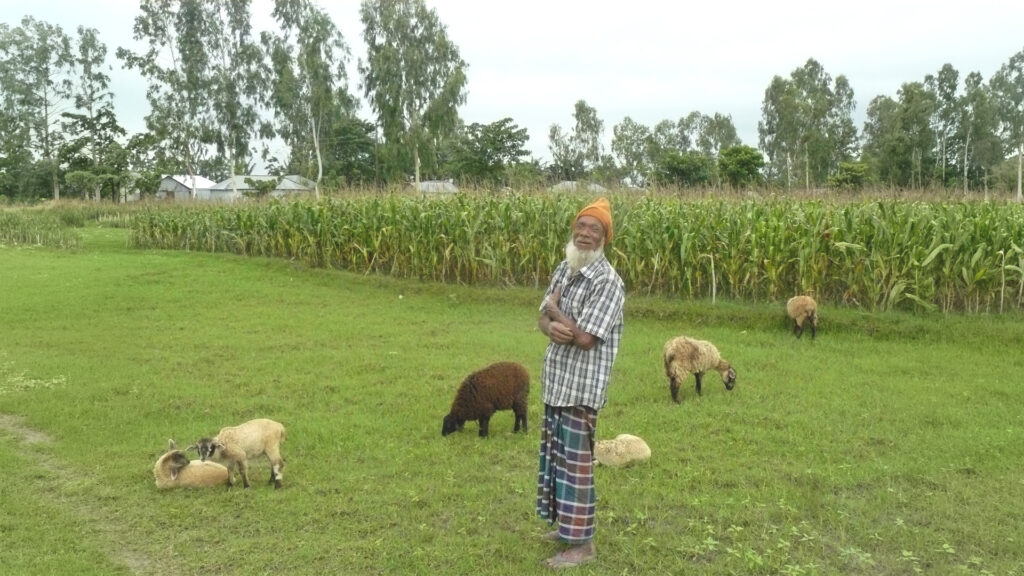
Once they reach their new home, people reminisce about the old one, feeling heartbroken.
These people do not have the option to move to the mainland because they would never be able to afford to buy land there. Not only are the chars free for anyone to take, but the land is also extremely fertile. Although chars are climate-vulnerable, the land benefits from floods—it becomes even more fertile as sedimentation is retained within the soil. People can cultivate 12-13 different yields in one year. If they must face flash floods that essentially condense cultivations within one month out of a year, they accept it.
However, the fact remains that they want to remain at home, absolutely avoiding migration and having to start again from scratch time and again. Climate migration is their worst-case scenario, and as of yet, there is no permanent solution.