Playing football in the Rohingya Camps for fitness and mental health
by Abu Bakar Bin Alam,
1 June 2026
For decades, the Rohingya people have been systematically denied fundamental citizenship rights such as access to education. In the squalid conditions of the Rohingya camps, Nur Kamal discovered a chance to grow beyond the confines of his strife-torn childhood. He had to learn the language he spoke in a country that was not his own. Since 2020, he has had the chance to grow not only in mind, but also in his body.
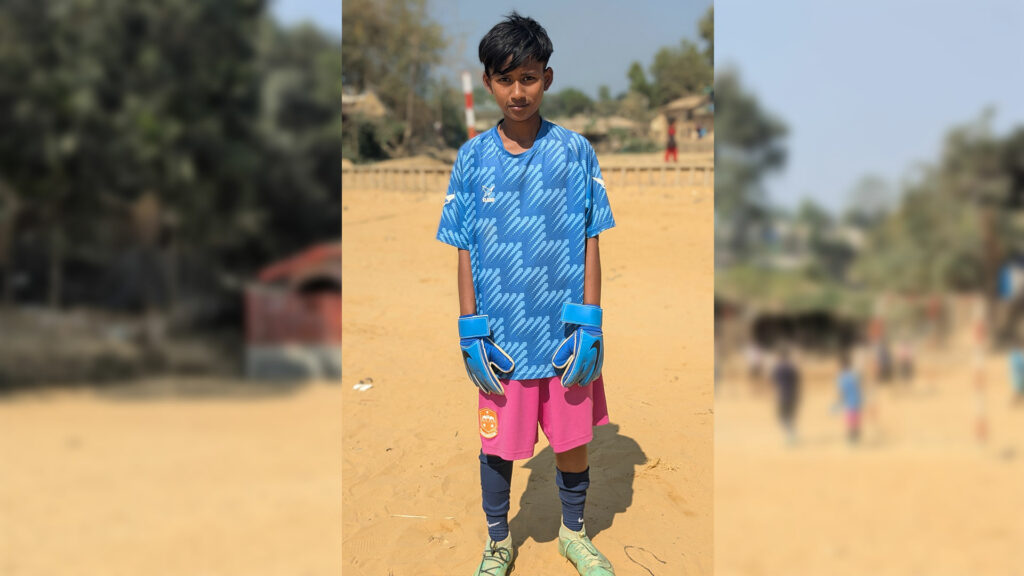
He had been playing football thanks to KLABU for the past four years. The Mobile Sports Library, sponsored by the Dutch organisation, provided children with sports equipment such as balls, shoes, etc., so they can play and grow.
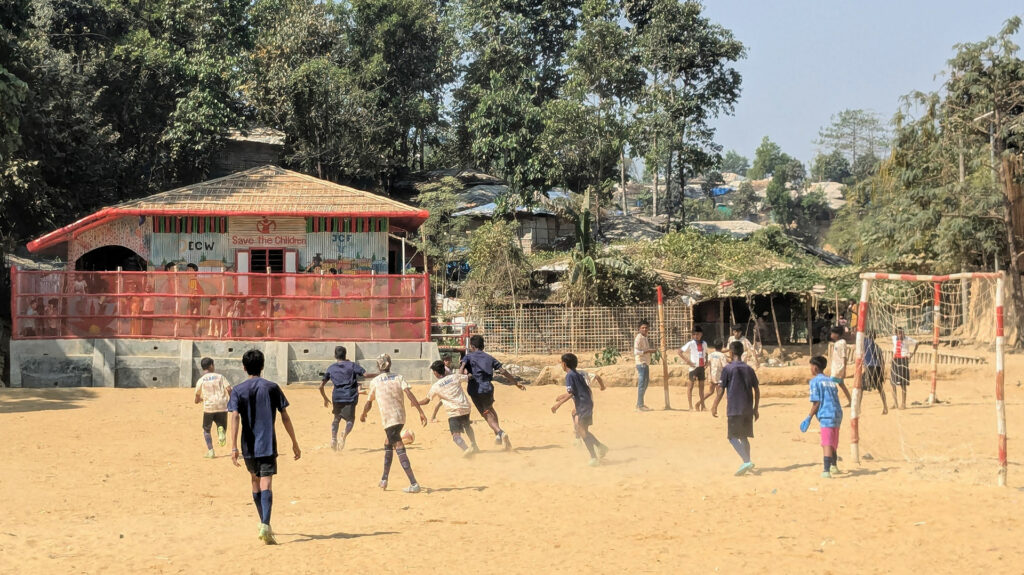
Playing as the goalkeeper in a jersey a size too big for him, Nur Kalam’s playful eyes belie his devotion towards studies. Nur Kalam says he wants to be a teacher when he grows up. He is always diligent about his studies and only comes to play after he has finished his homework.
The Rohingya people, deprived of fundamental citizenship rights in Myanmar, have scant opportunities to shine in the public sphere, severely constraining the options for a role model or icon who is Rohingya. Within the confines of these camps, it is the teachers who inspire the respect and admiration that would be apropos for a celebrity. These keepers of knowledge affirm the hope that with enough learning, a Rohingya child can aspire to better things, like pursuing higher education.
Nur Kamal is one of countless Rohingya children who find a respite from their arduous lives in the great game of football. Between classes and home, the hours on the dusty field chasing after the ball are a chance to forget the caprices of fate.