By Friendship News Desk
3 August, 2026
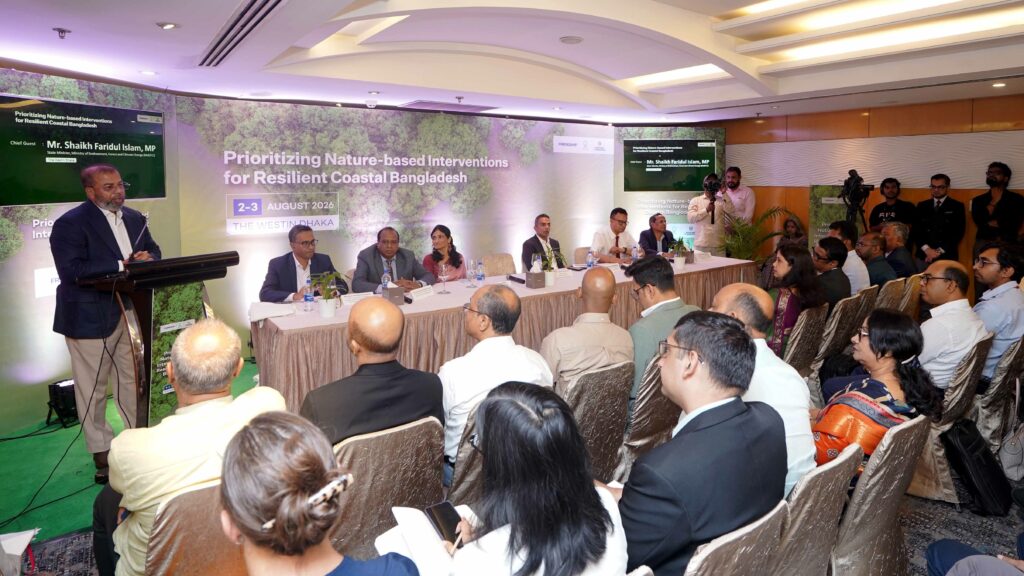
A workshop titled ‘Prioritising Nature-based Interventions for Resilient Coastal Bangladesh’ was conducted in a high-level collaboration with Conservation International and the Ministry of Environment, Forest, and Climate Change. The initiative aims to identify where restoring and protecting mangroves in Bangladesh can have the greatest impact, contributing to the development of a coordinated national coastal resilience blueprint. The two-day technical workshop was held on 2-3 August to identify and prioritise nature-based solutions for strengthening the resilience of Bangladesh’s climate-vulnerable coastal regions.
Sundarbans is the world’s largest mangrove forest and Bangladesh’s only natural guard against the impacts of cyclones, storms, and coastal erosion. The forest is essential for biodiversity, livelihoods, and carbon storage. Bangladesh heavily relies on the forest for protection, and as climate risks continue to intensify, protecting and restoring these ecosystems remain central to building long-term coastal resilience.
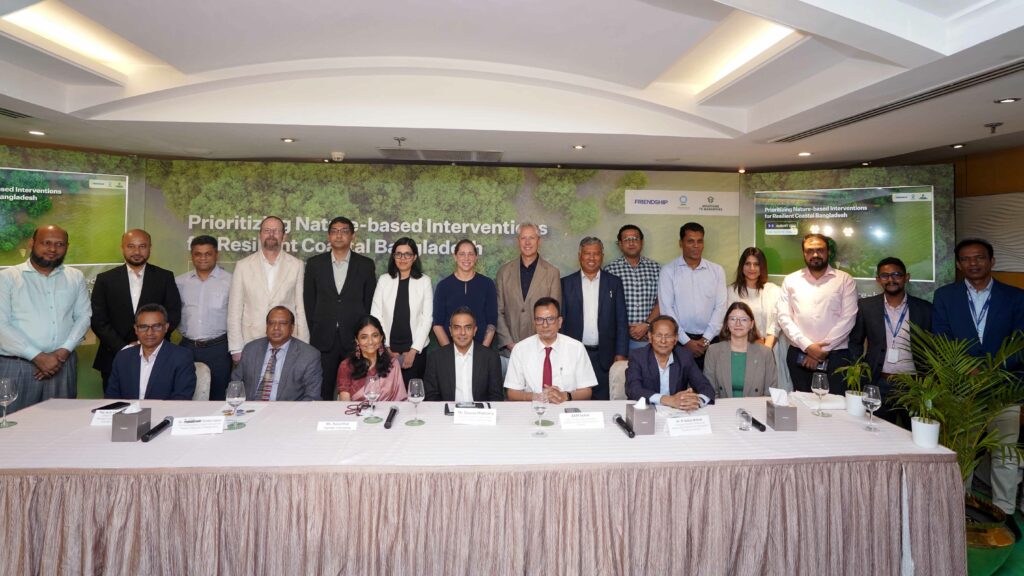
At the workshop inauguration ceremony, Shaikh Faridul Islam, MP, State Minister at the Ministry of Environment, Forest and Climate Change (MoEFCC), was the Chief Guest. Dr Mohammad Faridul Islam, Former Secretary, Government of the People’s Republic of Bangladesh, and AKM Sohel, Additional Secretary at the Economic Relations Division (ERD), attended the ceremony as Special Guests. Mohammad Amir Hossain Chowdhury, Chief Conservator of Forests at the Bangladesh Forest Department and Professor Dr Abdul Wahab at the Department of Marine Fisheries and Aquaculture, Bangladesh Agricultural University, served as the Guests of Honour.
The inauguration ceremony began with a welcome speech by Friendship founder Runa Khan. Saurav Malhotra, Managing Director for South Asia at Conservation International, also addressed the event. On the second day of the workshop, Sultan Salauddin Tuku, MP, State Minister at the Ministry of Fisheries and Livestock, served as the Chief Guest. Md. Shahzaman Khan, Director General of the Department of Livestock Services and Dr Md. Lutfor Rahman, Director General at the Department of Environment, were the Guests of Honour. Dr Mohammad Faridul Islam, Former Secretary, Government of the People’s Republic of Bangladesh, attended as the Special Guest.
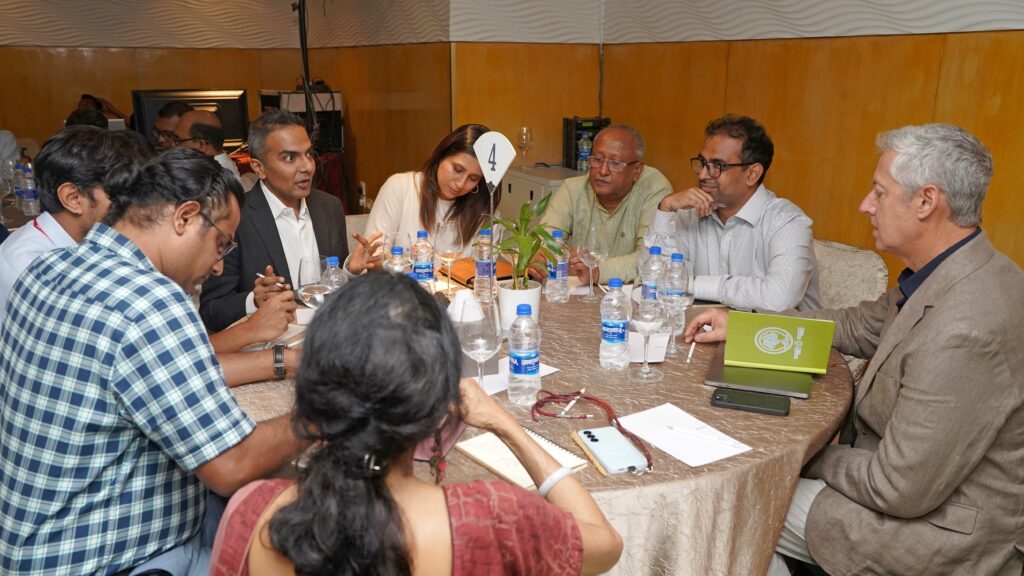
Chief Guest Shaikh Faridul Islam, MP, State Minister at the MoEFCC, said, “I really appreciate the initiative taken by Conservation International, as well as Friendship.” He also added, “A lot of NGOs are working, or INGOs are working in that area, but if you are working collectively, only then it will be very effective for the community.”
During her speech, Friendship founder Runa Khan shared, “Organisations like us, the private sector, civil society, the UN, and international partners are only there to help and strengthen what the government decisions are. We call for a move beyond fragmented projects towards a coordinated landscape action with courage, with hope, and with a dream for Bangladesh. We will have resultant action by the people, for the people; for the environment, for biodiversity, for the life of our country protected by a coastal belt which saves our lives.”
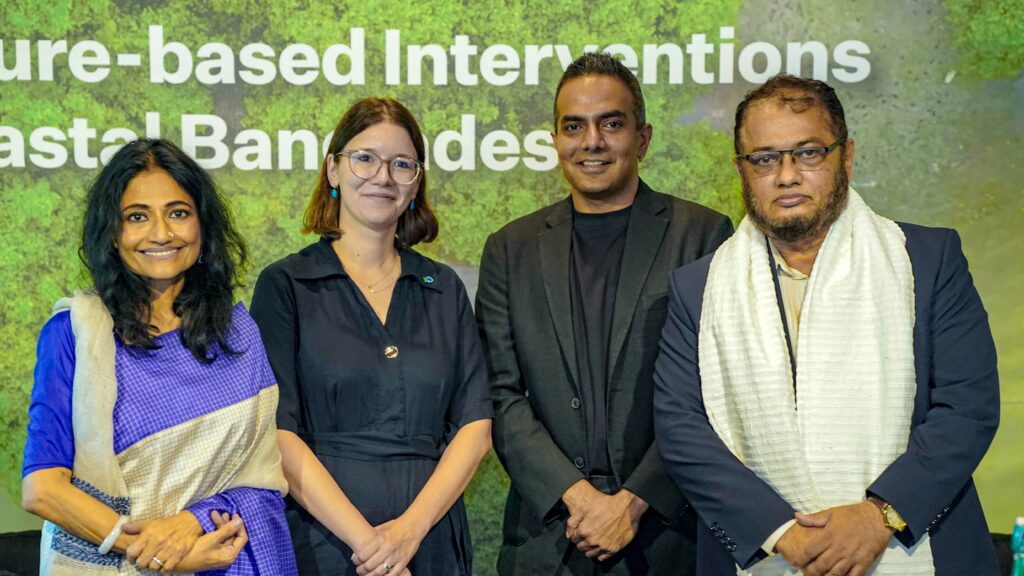
Saurav Malhotra, Managing Director South Asia, Conservation International, said, “Bangladesh has made significant investments in helping coastal communities adapt to climate change. Restoring and protecting mangrove forests is an important part of that effort, helping reduce climate risks while supporting wildlife and communities’ livelihoods. Through our collaboration with Friendship and the Government of Bangladesh, Conservation International is committed to helping identify practical, science-based solutions that can be scaled to deliver lasting benefits.”
The workshop aimed to identify coastal areas in Bangladesh where mangrove restoration could deliver the greatest impact for people and nature. Participants and technical experts reviewed maps, technical data, and scientific evidence to identify priority locations that would have the greatest benefits for biodiversity, climate, and ecosystem-based livelihoods, while assessing community readiness, institutional coordination and data availability. Workshop participants explored global best practices in coastal green-grey solutions and the role of mangroves as high-value blue carbon ecosystems. These discussions are expected to contribute towards coordination for coastal resilience, including priorities for restoration, governance, monitoring, policy support, and sustainable financing. The findings will contribute to the development of an integrated national coastal resilience plan.
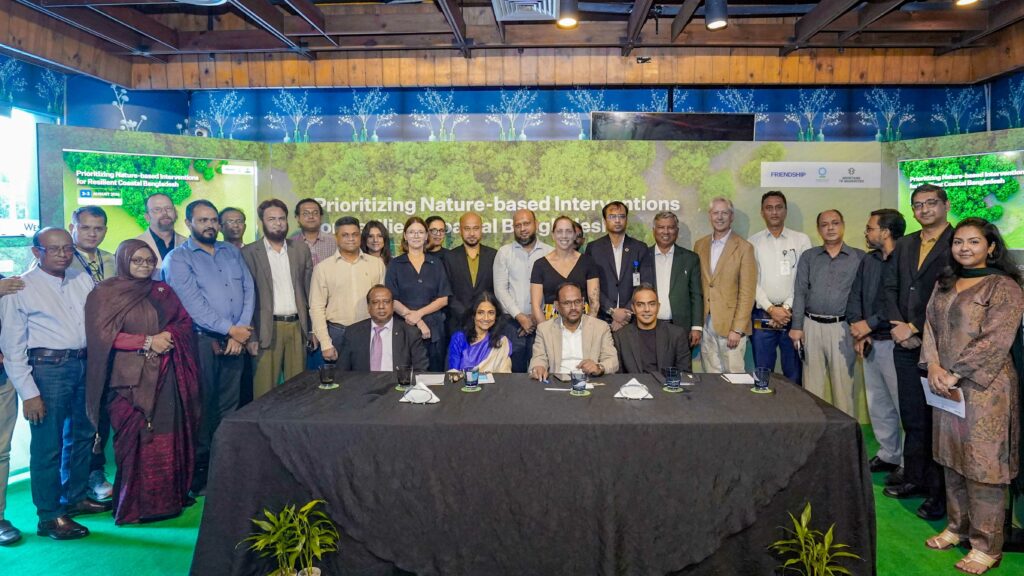
Restoring Ecosystems from the Mountains to the Sea
The workshop is part of the Mountains to Mangroves initiative, a regional programme across Bangladesh, India, Bhutan and Nepal that promotes nature-based solutions by restoring and protecting connected ecosystems from Himalayan watersheds to the coastal landscapes bordering the Bay of Bengal. In Bangladesh, the initiative supports efforts to restore mangroves and strengthen the resilience of vulnerable coastal communities in the Khulna and Satkhira districts through closer collaboration between the Government, technical experts and development partners. At the end of the workshop, an action plan outlining institutional responsibilities, next steps, coordination mechanisms, and priorities for future technical collaboration was generated.
Together, Friendship, Conservation International, and the Government of Bangladesh are working to restore mangroves and strengthen climate resilience in coastal communities. To date, the partnership has planted more than 236,000 mangrove seedlings across nearly 95 hectares, directly engaged more than 2,000 community members and benefited over 30,000 people. The joint Friendship-Conservation International Enhancing Coastal Adaptation and Resilience in Bangladesh (CARB) project, currently in the preparation grant phase under the US$9.8 million GEF-8 Least Developed Countries Fund, aims to restore a further 430 hectares of mangroves and strengthen 118 kilometres of embankments and benefit more than 43,000 people.