In a village where poor irrigation and flash floods left farmers repeatedly empty-handed, Lavli Begum turned to building a livelihood system and becoming a trusted community leader
By Iffat Ara Sharmeen
22 July, 2027
In the remote village of Lalar Par in Mymensingh’s Haluaghat sub-district, where climate and border tensions shape the local economy, farmers often struggled to find stable work and income generation opportunities. Reliance on rice and vegetables for food and income was not freeing the community from perpetual poverty. The grain economy was failing people due to poor Boro-season irrigation. Seeing no other option, Lavli Begum, a homemaker and mother of three children, decided to take initiative and take charge of her own household finances and start her own micro-economy at home.
From Hardship to Ownership
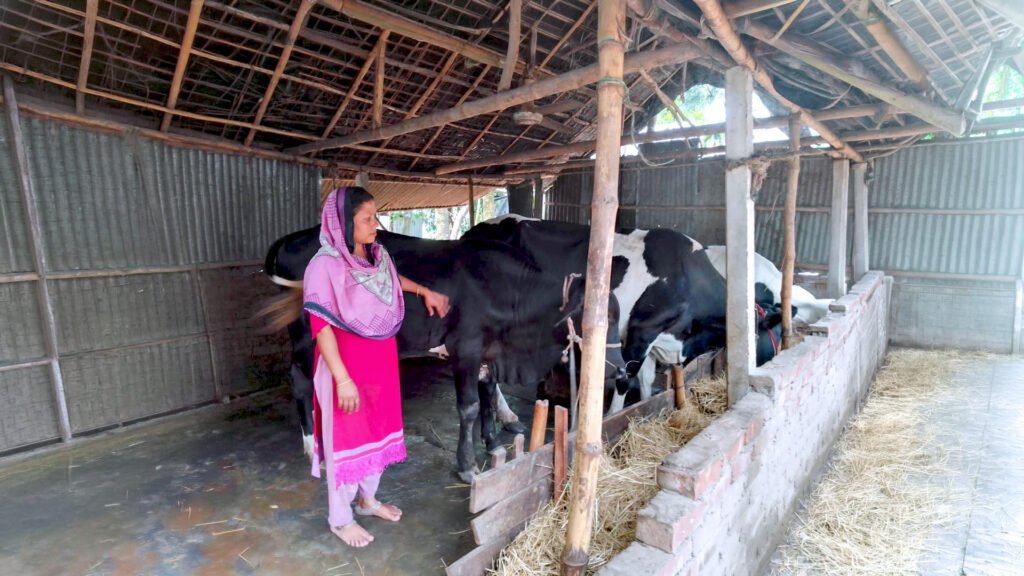
Lavli Begum took matters into her own hands by collaborating with other farmers in the village and creating the Friendship Farmers Club with the guidance of a Friendship official. Given that she owned two milking cows in her household, she decided to train herself in livestock rearing and farming at the Club. With Friendship’s advice, she took a microfinance loan from Mushti and combined it with some of her own savings to buy two more cows.
The four cows together became the start of a successful household micro-economy. Lavli turned the hardship in her home into an enterprise not from desperate borrowing, but through meticulous planning and disciplined choices. Her cow farm produced up to 35 litres of milk daily, which she sold for up to 3000 taka every day. She splits the income generated into three purposes: farm maintenance, savings, and domestic expenses. She now has ten cows in her farm that generate sufficient income for her family.
An Economic Changemaker and Champion
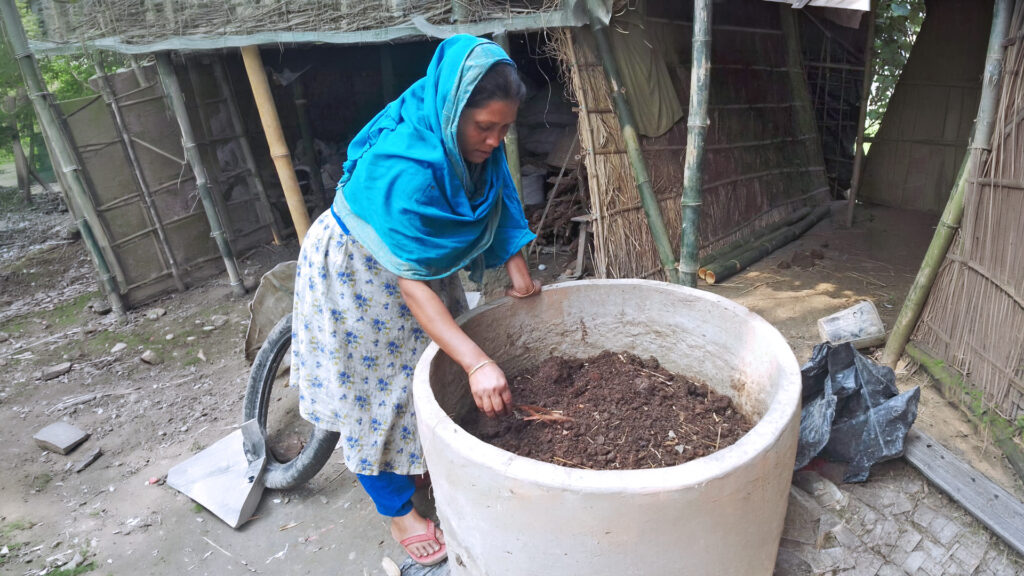
Lavli Begum did not stop at cow farming. She diversified her business portfolio by turning cow dung into vermicompost, which she then uses for backyard vegetable farming. With more income and self-sufficiency, she is no longer a beneficiary stuck in the cogwheels of poverty. She is growing individually but also helping others join in to a growing income stream. Women often come to her seeking advice and feel inspired by her success. She feels valued as a community member.
Lavli now designs handicraft products with other women in the village. She often personally escorts pregnant women in her village to get their maternity and child cards, helps elderly women access old-age allowance, supports widows navigating the Department of Social Services, and intervenes against child marriage when she hears of it. Her soft power, credibility, and repeated competence earned the trust of the villagers, who now see her as a capable leader. Lavli Begum is a reminder for rural women that one does not need much to achieve self-sufficiency. Indigenous knowledge, existing household assets, strategic initiatives, and hope together can do wonders. Learning, advising, and leading a community through knowledge exchange is an economic pathway that prevents social atrocities against women and improves their social standing.