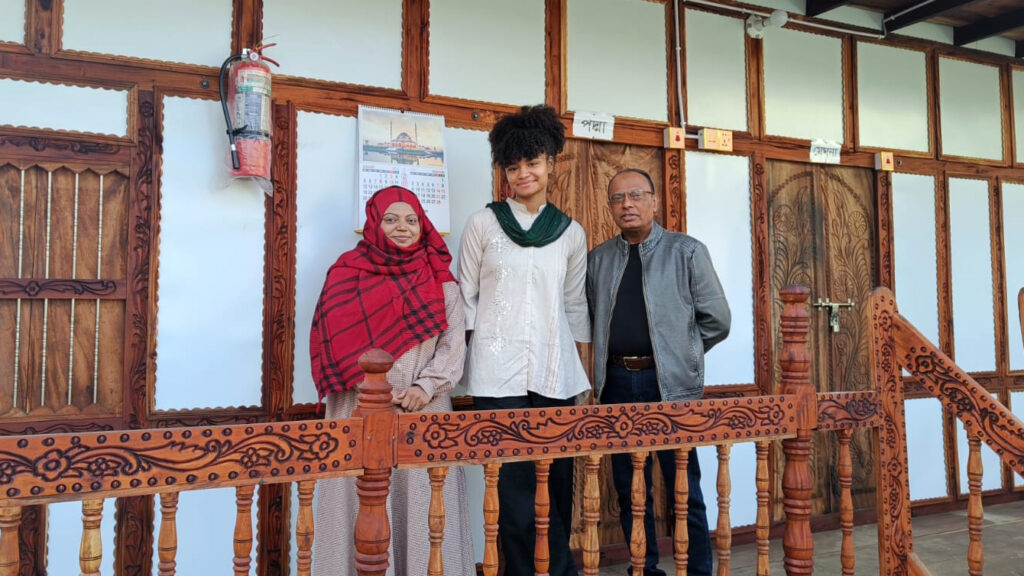
by Katharina Frowein,
26 February, 2026
When I arrived in Bangladesh for my internship with Friendship, I carried two big questions with me: What does climate and sustainable development work actually look like on the ground? And how does post-development theory, i.e. the idea of centring communities’ own visions for progress, apply to organisations in the Global South?
From day one, I was immersed in work that spanned research, field visits, and conversations with the people who make Friendship’s Climate Action programmes possible. I dug into Bangladesh’s history of climate-induced loss and damage (L&D), going through global policy debates to Friendship’s own data since 2017. I explored cyclone-resilient housing and shelters and studied Locally Led Adaptation (LLA) projects, tracing the country’s disaster relief strategies all the way back to Cyclone Bhola in 1970. I looked into Friendship’s MEL/MEAL framework, reviewing indicators to ensure that every lesson learned feeds back into stronger climate action.
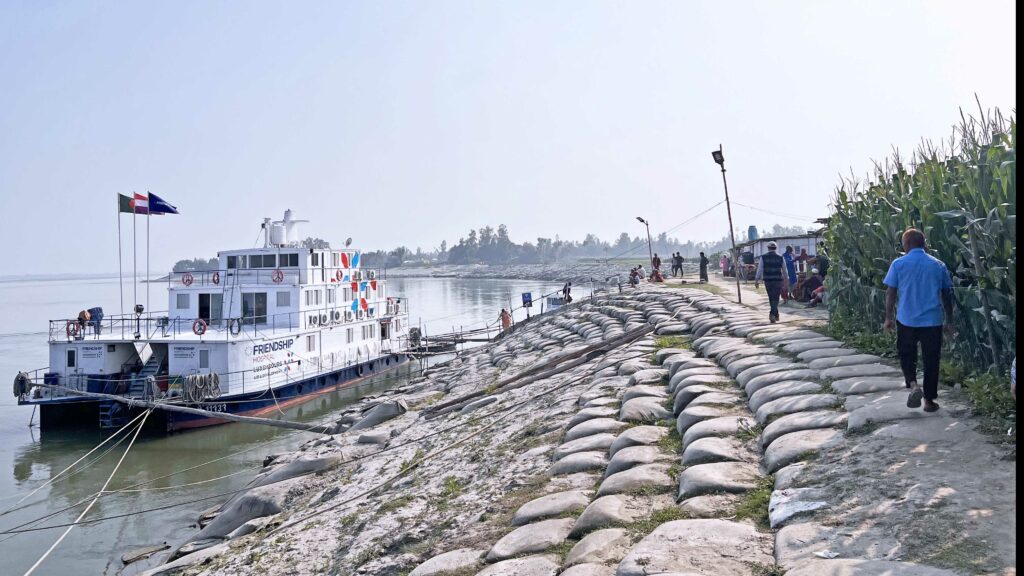
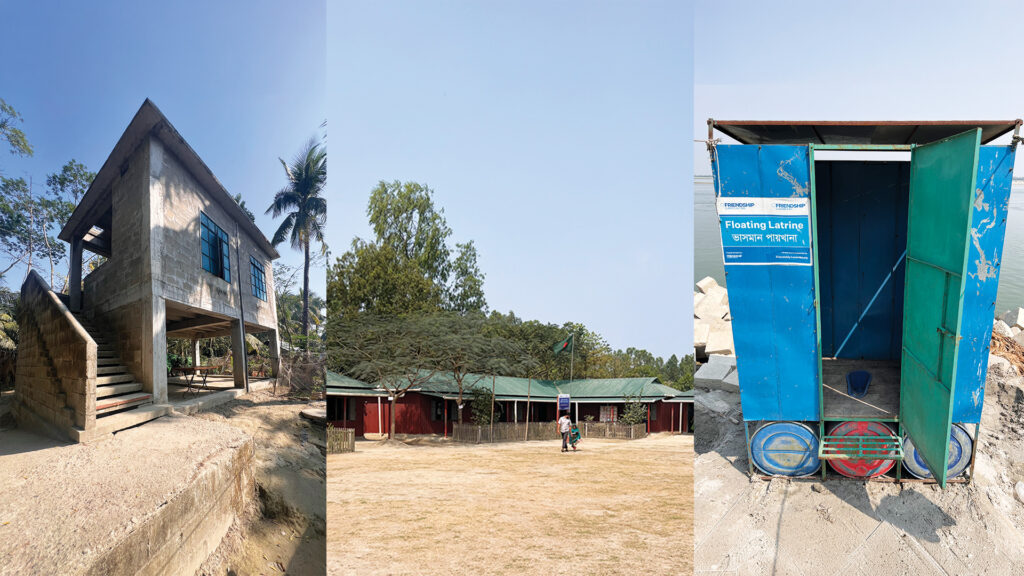
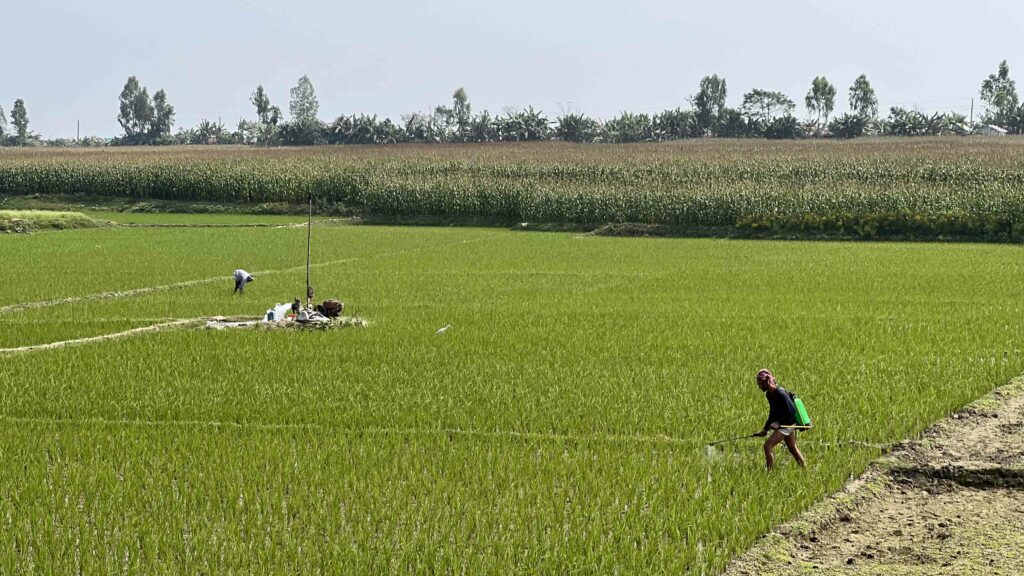
The heart of my experience, though, came during two field visits. In Kuakata, I joined in on a Quarterly Programme Review Meeting (QPRM) that gathered Friendship’s Climate Action teams from across the country, visited cyclone-resilient homes in Misreepara and Nojibpur, and saw how (Assistance for Sustainable Development) ASD projects are helping farmers adapt to changing conditions. In Gaibandha, I stepped aboard the Friendship hospital boat, met participants in inclusive citizenship and sustainable economic development projects, and saw firsthand how education and climate resilience go hand in hand.
Through these journeys, I witnessed climate action at every scale—international negotiations on loss and damage, national disaster management strategies, and local solutions designed and led by communities themselves. The work is complex, but its human impact is clear: safer homes, stronger livelihoods, and the confidence to face a changing climate.
Beyond the field, Bangladesh unfolded in vibrant colour. I wandered through the winding streets of Old Dhaka, browsed art galleries in Dhanmondi, tasted more varieties of street food than I can name and joined celebrations like Falgun. I even found myself at the Arka Fashion Week and the Dhaka Maker’s Fair, reminders of the creativity and resilience that thrive alongside the challenges.
I leave with a deeper understanding of Bangladesh’s vulnerabilities, yes, but also of its ingenuity. Friendship has shown me how climate action can be both deeply technical and deeply human, grounded in the realities of those most affected. My expectations were not just met; they were expanded, reframed, and made real in ways I couldn’t have imagined before setting foot here.