On World Health Day, Friendship joined the One Health Summit in Lyon to advocate for the collective well-being and dignity of people, animals, ecosystems, and the planet
By Friendship News Desk,
8 April 2026
The Covid-19 pandemic and the succession of global health crises have revealed the profound interdependence between environmental health, human health, and climate health. Across the world, the well-being of ecosystems and communities is increasingly threatened by inaction, inequality, and unsustainable practices.
For Friendship, which has worked for 23 years with some of the most climate‑exposed and underserved communities, these connections are not theoretical. They shape daily life. They determine who has access to safety, food, water, and health.
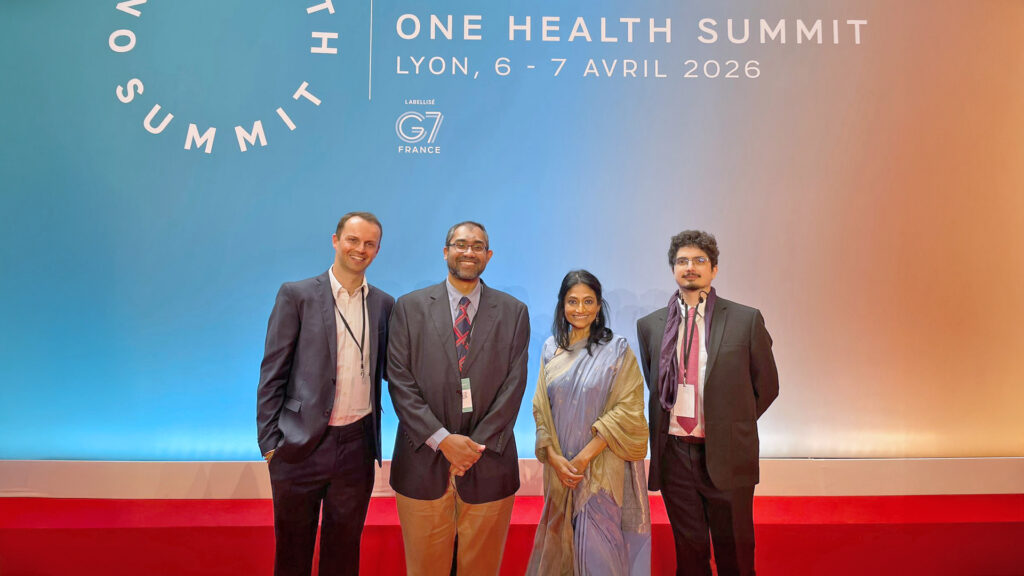
Achieving One Health now requires coordinated responses grounded in science, prevention, knowledge sharing, and international cooperation. This was the spirit shared by world leaders and One Health practitioners as they gathered on World Health Day. The International One Health Summit was hosted by the Government of France under the French G7 Presidency in Lyon from 6 to 7 April 2026.
Science for One Health: Turning Evidence to Action
For the first time, the One Health Summit brought together governments, heads of international and regional organisations, scientific and academic experts, the private sector, civil society, local authorities, and youth advocates from around the world under one platform.
The goal: to advance scientific cooperation, strengthen multilateral action, and build broad science-driven partnerships that turn evidence into implementation for a healthier future for all.
A Message from Civil Society
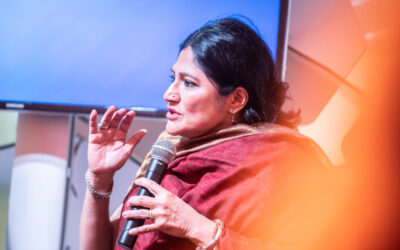
As the Honourary President of the One Sustainable Health Forum Approach, Runa Khan opened Panel 3 – “Expanding the boundaries of One Health: rethinking our lifestyles for sustainable health”. Speaking on behalf of civil society, she underscored One Health as an urgent and necessary response to intersecting crises, including climate disruption, inequality, and recurring threats to human, animal, plant, and ecosystem health.
In her address, Runa Khan frames today’s intersecting crises, such as pandemics, climate change, and inequality, as a wake-up call to rethink humanity’s relationship with each other and with nature. She highlighted the One Health approach as a pathway to a more resilient future, grounded in solidarity, trust in science, respect for community knowledge, and greater investment in prevention and preparedness.
Drawing on more than two decades of Friendship’s work, she emphasised that sustainable impact depends on collaboration, dignity, and mutual respect, principles that inspired the creation of the One Sustainable Health Forum. She called for breaking silos, ensuring equitable resource distribution, and uniting public and private actors around a holistic vision that advances health, dignity, and opportunity for both people and the planet.
From Global Vision to Local Action
Reshaping internal institutional workings to incorporate the ‘One Health’ approach and investing in concrete actions are needed to build health solutions and surveillance systems that prevent spillovers across health, food, and environmental risks. The voices of youth and indigenous communities also cannot be left behind as they are often the groups most in touch with climate extremities, biodiversity hotspots, and harsh environments. This is not only a matter of policy coherence; it is a matter of justice, resilience, and implementation.
Friendship uses these strategies when incorporating the One Health approach into its interventions. That work includes integrated health systems, environmental stewardship, and community-based models that connect prevention with dignity. These strategies require research, innovation, and extensive public-private partnerships to incorporate the ‘One Health’ approach and invest in concrete actions to build health solutions and surveillance systems that prevent spillovers across health, food, and environmental risks. The voices of youth and indigenous communities also cannot be left behind, as they are often the groups most in touch with climate extremities, biodiversity hotspots, and harsh environments. This is not only a matter of policy coherence; it is a matter of justice, resilience, and implementation.
Friendship uses these strategies when incorporating the One Health approach into its interventions. That work includes integrated health systems, environmental stewardship, and community-based models that connect prevention with dignity. These strategies require research, innovation, and extensive public-private partnerships.