A Grassroots Response to Child Marriage and Social Change
By Syed Abu Sinjan Saadat,
27 March 2026
In the remote char regions of Bangladesh, where shifting riverbanks shape both land and life, access to information remains limited. These geographically isolated communities often face high levels of poverty, low literacy rates, and deeply rooted social challenges. In such a context, conventional awareness campaigns struggle to reach people effectively. It is within this gap that Friendship developed char theatre as a practical and impactful tool for communication, raising awareness, inclusive education, and cultural preservation.
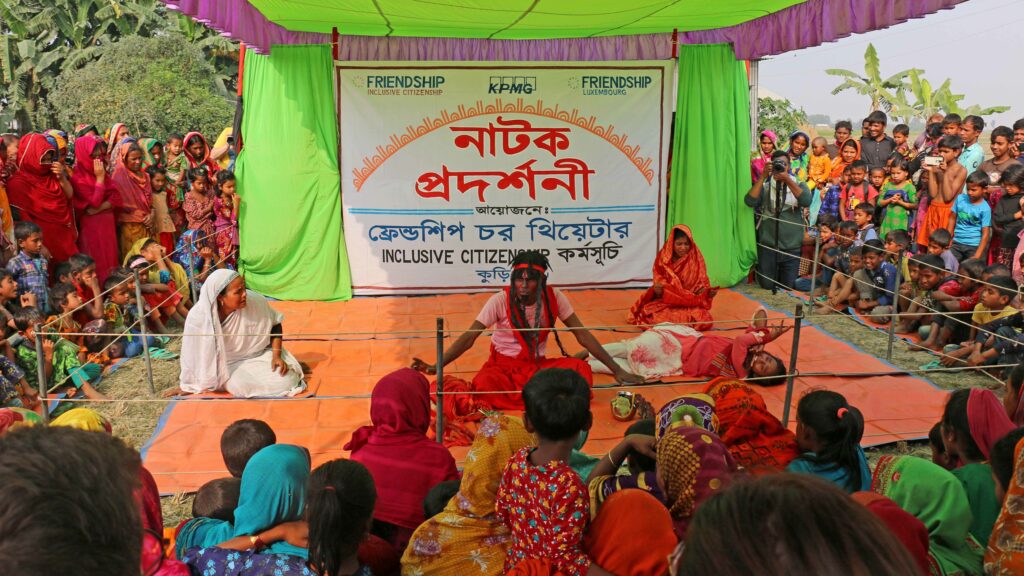
Char theatre is a community-based initiative where community members perform dramatised stories that reflect the realities of their own lives. Unlike external interventions, these performances are created and enacted by people from the chars themselves, ensuring that the language, tone, and context are immediately relatable. This local ownership has proven critical in building trust and engagement among audiences.
The themes addressed through char theatre are both urgent and sensitive. Among them, child marriage remains one of the most pressing issues. In many char communities, early marriage continues due to economic hardship, social norms, and limited awareness of its long-term consequences. Through carefully developed narratives, char theatre presents the emotional and practical realities of such decisions.
The impact of these performances is deeply felt. It is not uncommon for audiences to respond with visible emotion, with many moved to tears as they recognise their own experiences reflected on stage. These reactions signal a level of connection that written materials or formal lectures rarely achieve in such contexts. By presenting familiar situations in a structured narrative, theatre allows communities to confront difficult truths in a shared space.
Importantly, the performances do not end with the final scene. They are typically followed by open discussions, where audience members are encouraged to share their thoughts, question prevailing practices, and consider alternatives. In cases addressing child marriage, these discussions often involve parents, community leaders, and young people, creating an opportunity for collective reflection. Over time, this process contributes to gradual shifts in perception and behaviour. This is particularly important for internalising the materials within these performances in conservative communities with limited education, because they so often involve taboo or sensitive subjects which would otherwise be difficult to communicate, much less encourage to put in practice.
Beyond awareness, char theatre also plays a role in strengthening social cohesion. The performances create a rare communal space in areas where isolation is common. It encourages dialogue not only on specific issues but also on broader questions of rights, health, and social responsibility.
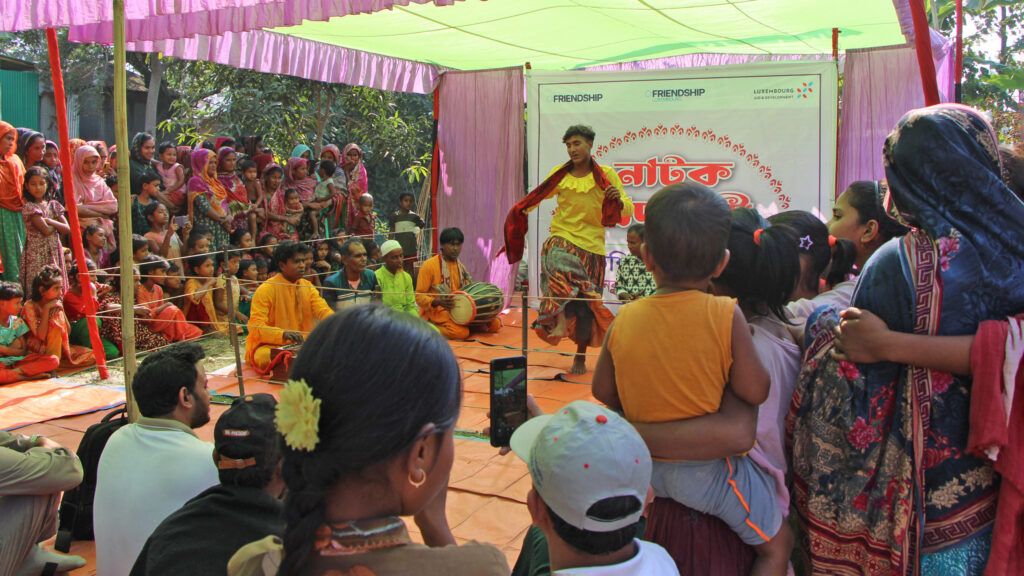
At the same time, char theatre contributes to the preservation of cultural identity. Performances frequently incorporate elements of traditional music, storytelling, and local performance styles. In regions where environmental changes and displacement threaten continuity, this integration ensures that cultural expressions remain active and relevant.
Accessibility is a key factor in the effectiveness of this approach. In areas with limited electricity, media access, and literacy, theatre serves as a direct and inclusive form of communication. It does not require reading skills or technological infrastructure, making it one of the most reliable ways to reach diverse audiences within the chars.
On this World Theatre Day, char theatre stands as a reminder of the role that culturally rooted, community-driven initiatives can play in addressing complex social challenges. Through a combination of storytelling, participation, and dialogue, Friendship’s work in the chars demonstrates how theatre can move beyond performance to become a catalyst for awareness and change.
In environments where formal systems often fall short, char theatre continues to provide a space where difficult issues can be seen, felt, and discussed openly. Its strength lies not only in what it presents, but in how it brings communities together to respond.