Rabeya did not just get a haven at the Friendship Sports Club Centre; she found a renewed sense of positivity
By Iffat Ara Sharmeen,
28 March 2026
While the modern world tosses around radical ideologies and shifting geopolitical moods, one thing remains certain. Children are suffering the most among warring grown-ups. It is unfortunate that children no longer have access to safe and clean playgrounds and sports facilities as they used to. Spaces dedicated to children are now becoming emergency shelters and makeshift hospitals.
Despite these circumstances, there are still some child-friendly corners in the world designed to let children be children. Friendship’s project ‘Nutrition, Recreation and Physical Fitness of Rohingya and Host Community Children of Cox’s Bazar (NRPFRHC)’ embodies this concept, especially for disadvantaged children in the Rohingya community.
Finding Healing and Hope
Children in the Rohingya community might be torn away from their homeland, but not torn apart in spirit. They do not shy away from a good game of football despite their dire living conditions. Take Rabeya Basri from Block A, Rohingya Camp 19 in Ukhiya Upazila, Cox’s Bazar, for example. In Buthidong, Myanmar, she used to play in open spaces around her home, but after fleeing to Bangladesh to escape violence, things changed.
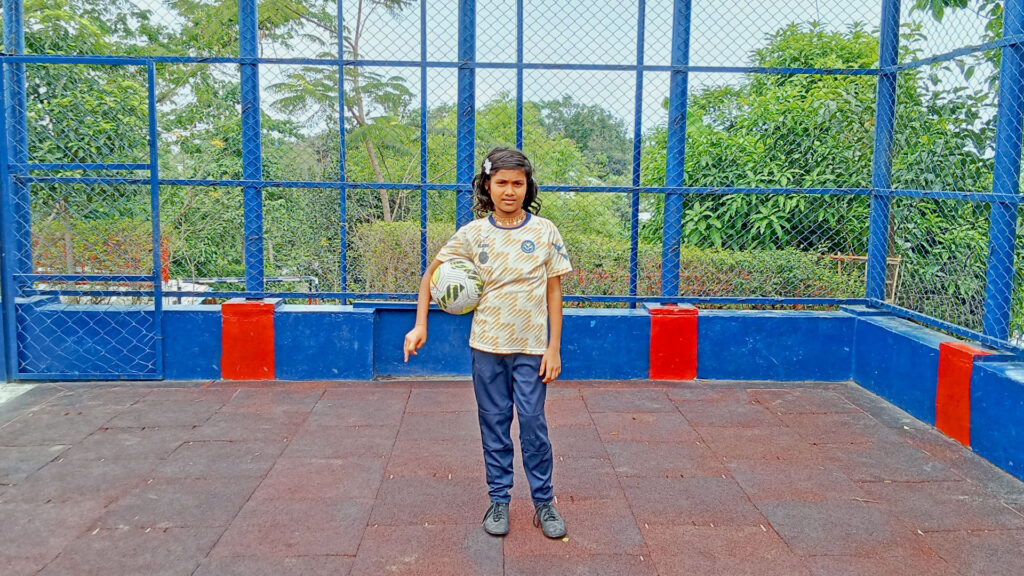
Rabeya’s family of eight slept under open skies and scrambled through diets based on little more than puffed rice. Those were her early days in Bangladesh. With no hygienic, safe space around for play, she constantly suffered from itching and rashes. Being a girl meant that she could not play often like the boys in her community.
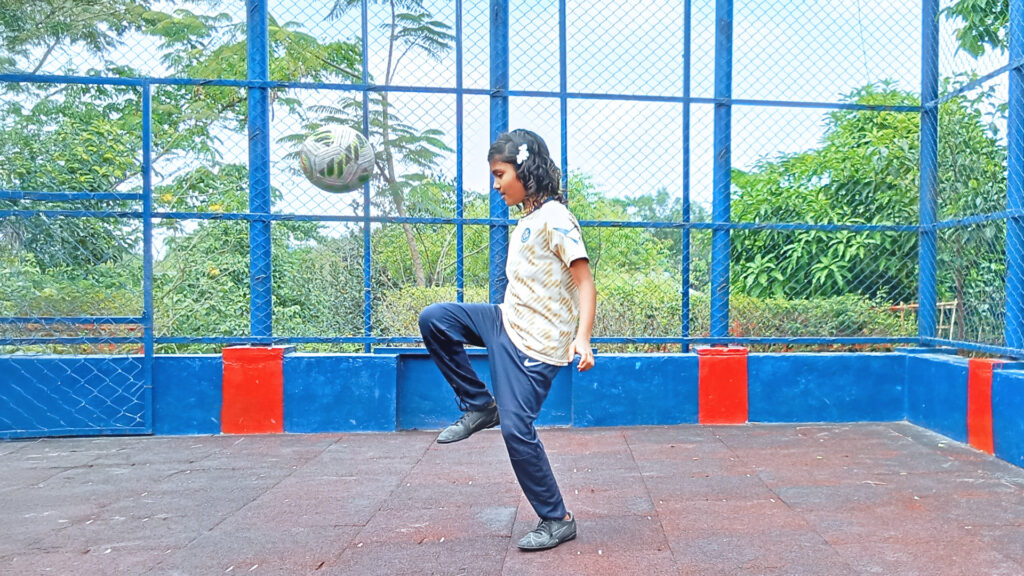
Rabeya regained a bit of her childhood after becoming a member of the Friendship Sports Club Centre. She and her friends from other blocks visit the club time to time to play football or stretch in the gym. She also enjoys the nutritious snacks available at the club, and attends the awareness sessions conducted by club mobilisers on child safety, fire hazards, landslides, wellbeing and fitness. These practices motivate her to find healing through misery and have helped her remain optimistic all these years since escaping chaos.
“I feel like a real football player when I wear the sports kit. Sometimes when I’m upset or when I miss my previous home, I come to the club and watch TV,” Rabeya mentioned.
Routine sports as entertainment and supervised play have paved the way for Rabeya to develop new friendships in a foreign land and live healthier lives. Rabeya now plays in the club a few days a week, although her parents forbid her from playing sometimes. For Rabeya, sport is one of the only ways she has left to reconnect with her homeland and childhood. The Friendship Sports Club Centre offers an outlet for her to enjoy that experience safely and healthily.