Creating awareness can sharply reduce the lethality of cervical cancer
By Dr. Mosamat Umma Kulsum,
5 April 2026
In the shifting river islands of northern Bangladesh, access to healthcare is never guaranteed. Communities are isolated, transport is uncertain, and awareness of preventable diseases remains low. Yet cervical cancer, largely caused by Human Papillomavirus (HPV), is both preventable and treatable if detected early.
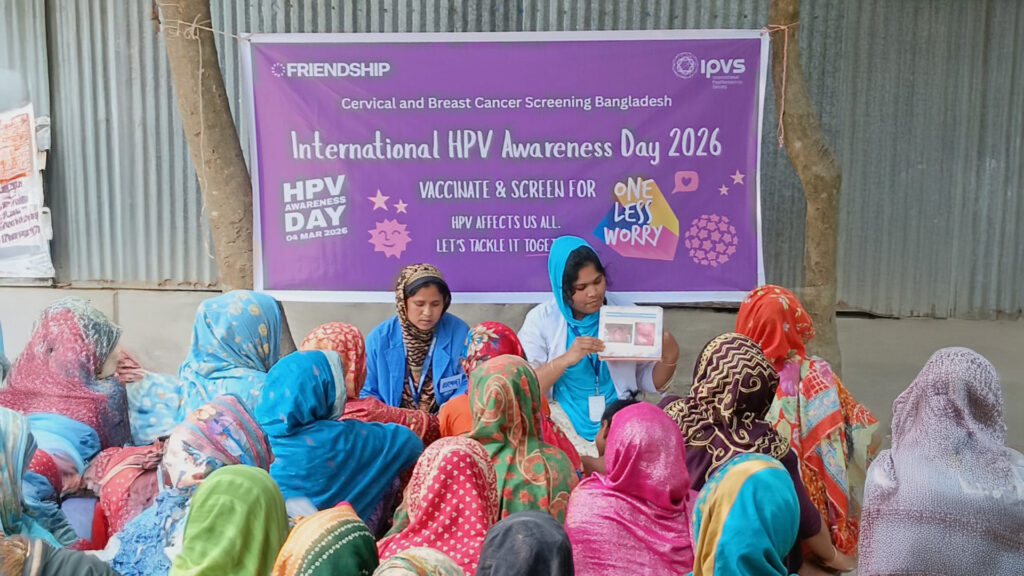
On International HPV Awareness Day, 4 March 2026, Friendship’s targeted awareness activities set out to close this gap. The goal was clear and urgent: ensure that even the most remote communities understand HPV, its risks, and the life-saving value of vaccination and early screening.
Ground Realities
The sessions surfaced both gaps and opportunities:
Low awareness persists
- Many participants have heard of the vaccine but did not understand its purpose.
- Knowledge of HPV’s link to cancers beyond cervical cancer remained limited.
Encouraging acceptance
- No strong resistance to vaccination among families.
- Vaccinated girls actively encouraged peers to get vaccinated.
High engagement
- Women and adolescents asked questions, shared experiences, and showed willingness to learn.
These insights reinforce a consistent pattern in hard-to-reach areas: awareness is the first and most critical barrier to overcome.
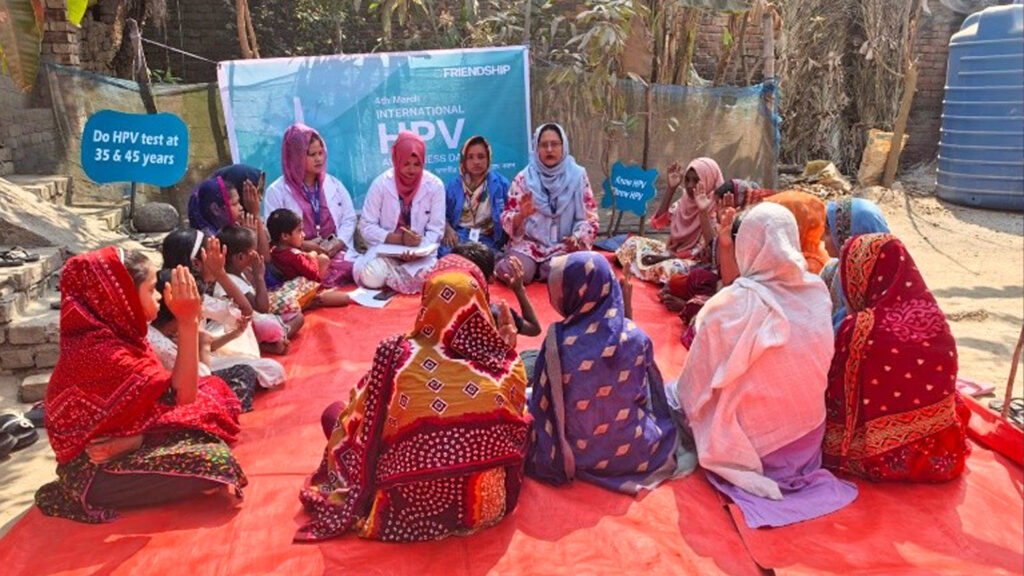
A Preventable Future Within Reach
Friendship Health Educator Mosammat Sumi noted, “We are not just sharing information, we are building confidence for women to take preventive action.”
This approach is essential in communities where stigma and silence often delay care-seeking. When women understand both the risk and the solution, they are more likely to act early.
Dr. Naheed Nazrul, a leading expert on cervical cancer and head of Friendship Hospital Shyamnagar, frames the larger vision, “Together, we move closer to a future where cervical cancer is preventable, detectable, and eliminated through vaccination and early screening.”
The pathway is already clear. Cervical cancer can be stopped through awareness, vaccination, and early detection. The challenge is ensuring these solutions reach every woman, no matter how remote her home. Efforts like these demonstrate that when awareness reaches the last mile, prevention becomes possible, and no woman has to be left behind.
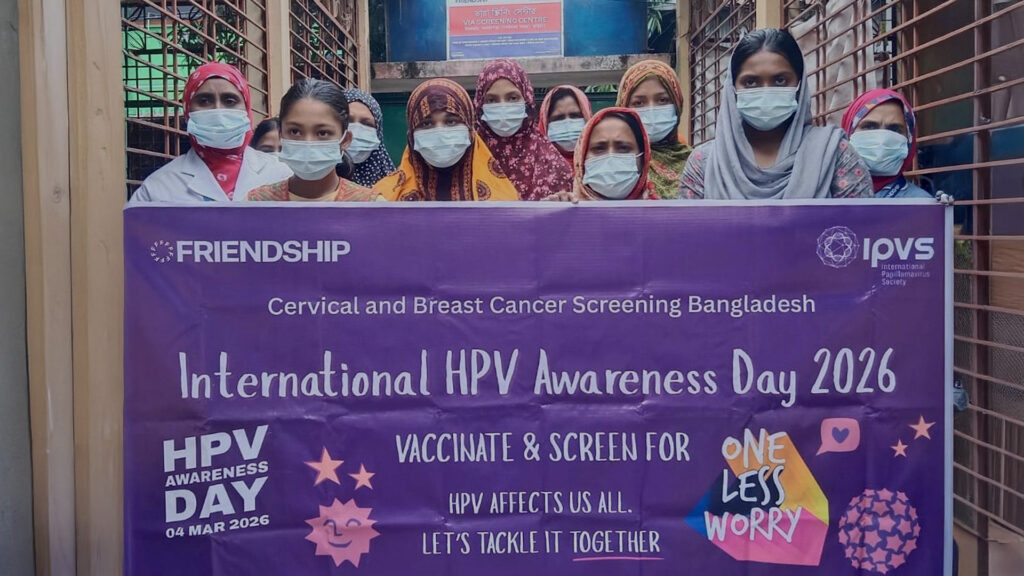
Taking Awareness to the Last Mile
Activities were conducted across Kurigram, Gaibandha VIA Screening Centres, and Friendship Hospital Shyamnagar.
- Over 50 participants joined sessions, including women, adolescent girls, community health workers, and clinic staff
- Formats included courtyard meetings, group discussions, leaflets, and one-on-one engagement
- Messaging focused on HPV transmission, cancer risks, vaccination (ages 9 to 14), and screening (ages 30 to 60)
These courtyard sessions are critical in char settings, where women often face social barriers and limited mobility. Creating safe, familiar spaces enables open dialogue and participation.
At the same time, 7,828 women completed HPV self-sampling, demonstrating growing trust in accessible, community-based screening methods.