Informing, encouraging, and empowering women to take charge of their reproductive health
By Iffat Ara Sharmeen,
8 February, 2026
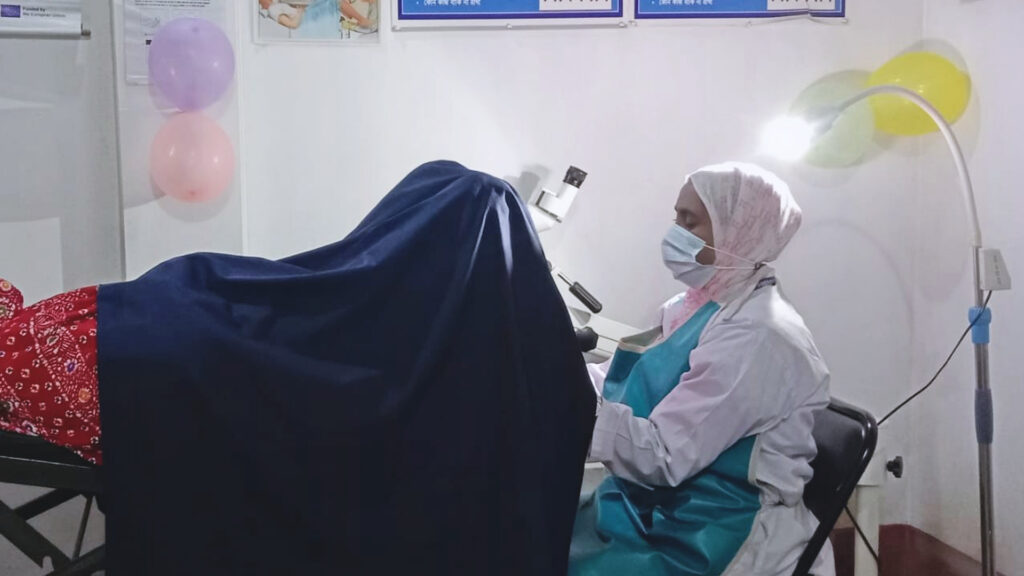
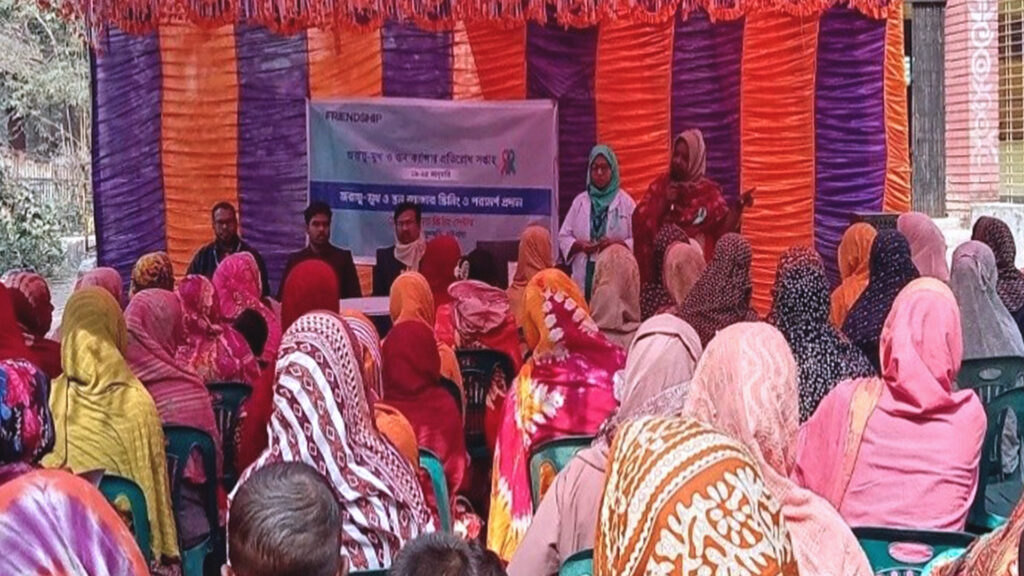
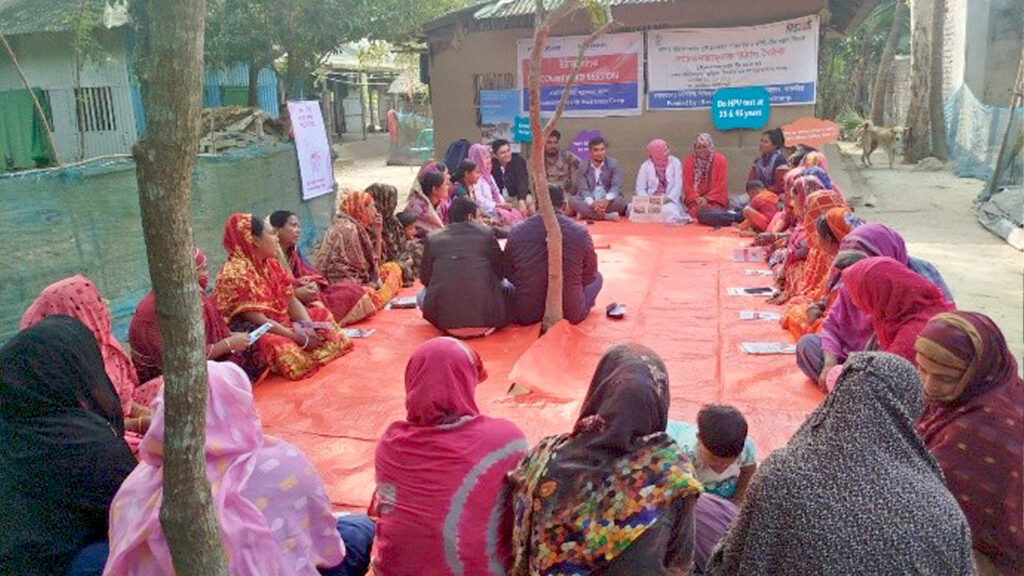
Friendship organised a month-long Cervical Cancer Awareness programme simultaneously across three centres – Friendship Hospital, Shyamnagar, VIA screening centre (VSC) Kurigram, and VSC Gaibandha. From 1 to 29 January, a total of 1,469 people participated in the programme and acquired the relevant knowledge and medical information on cervical cancer. 46 sessions were held in clinics, and 19 were organised at the field level.
Programme participants were informed how the cancer develops, highlighting the Human Papilloma Virus (HPV) infection as the leading cause, but also stressing other risk factors such as early marriage, early sexual activity, and smoking. They were informed about common symptoms and warning signs, for example, abnormal bleeding, discharge, or pelvic pain. Participants also learned about affordable early detection screening procedures, such as VIA tests, which are carried out by Friendship. Vaccination and other healthy lifestyle practices were also encouraged to improve women’s wellbeing. Among the participants, 206 women received screening services. 2 women tested VIA-positive and underwent thermal ablation after providing consent. VIA testing has been particularly helpful in providing affordable screening solutions among these hard-to-reach communities.
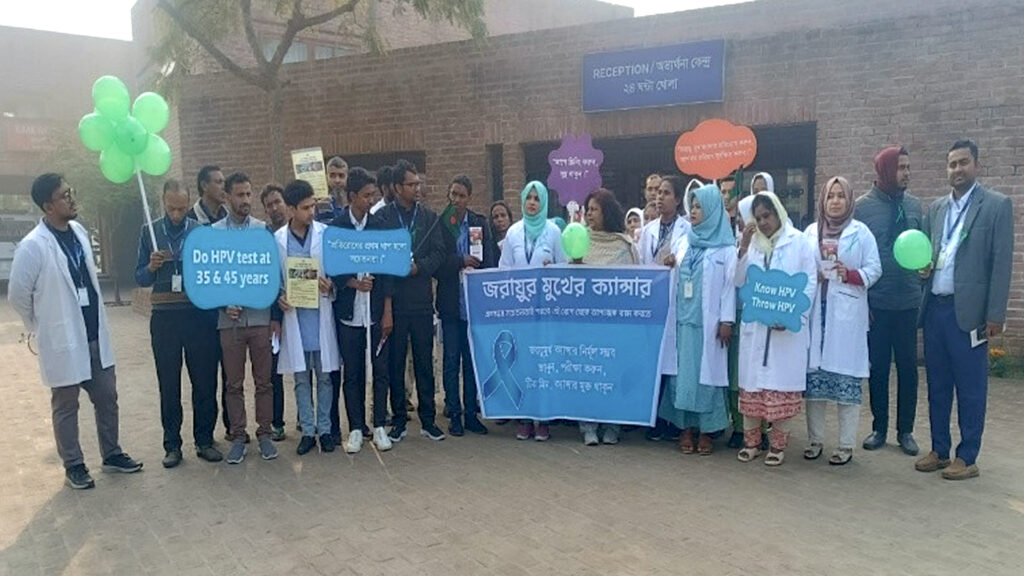
The programme did not just engage women but also reduced social stigma and included men. 28 men participated in the clinical sessions, while 71 men participated in the field sessions in the hopes that the information could improve health outcomes within their families.
Based on their feedback, it was clear that they understood that early detection can save lives. They are keen to send their wives and daughters, as well as other female relatives, to the VIA centres for early detection. They even intended to discuss the VIA tests on Friday congregational prayers so that more people can know about them. Women showed far more reluctance in this regard, citing reasons such as shyness and fear despite wanting to do the screening test. Many women explicitly mentioned not wanting to do the tests as they have no husbands, no reproductive issues, or no periods at the time. A few women mentioned giving birth alone and thus consider the VIA test a breach of privacy.
The awareness programme complements the national effort on vaccination and early detection campaigns. Earlier, the Bangladesh Government directed that from 2026 onwards, the national HPV vaccination campaigns operating throughout the country should be a continuous service as part of the Expanded Programme on Immunisation (EPI) and not just one-off campaigns. Girls aged 9 to 14 are eligible, and the primary focus of the national campaign includes those outside formal schooling or institutions.
Dr Naheed Nazrul, Director and Head of Friendship Hospital Shyamnagar, shared on the occasion of Cervical Cancer Awareness Month that “cervical cancer elimination is achievable, if no woman is left behind in screening.” Friendship Team Leader Dr Mosamat Umma Kulsum echoed a similar sentiment. “Awareness is the first step towards elimination,” she urged.